When Trauma Walks Into the Classroom
How trauma can impact a child's experience in school, including anxiety during transitions, emotional overwhelm in the classroom, and behaviors that are often misunderstood by educators.
Presenta: Bryan PostGrabado en jun 202690 minInglés · Subtítulos (CC)
Lo que aprenderás
- Behavior is the language of stress. As Bryan Post puts it, quoting Bruce Perry, an oppositional, defiant child is a scared child, so the lens shifts from “problem child” to “dysregulated child.”
- Why ordinary school moments (bells, hallways, the cafeteria, substitute teachers, unstructured time) can feel neurologically threatening to a stress-sensitive child.
- How the stress of a school day adds up hour by hour, so by the time a child gets home their window of tolerance is used up.
- Why a dysregulated child cannot think clearly or remember in the moment, and why safety and connection have to come before learning.
- Why public behavior systems like color charts can induce shame and recreate trauma dynamics, and what time-in looks like instead.
- Practical ways teachers and parents can co-regulate: meet the child at the door, give transition warnings, keep snacks available and repair after conflict.
Transcripción Ver transcripción completa +
0:00This is the intro screen which is pretty fantastic if I do say so myself and as I was saying So I've been doing this work for the better part of 28 years and I am a Husband a father of seven. I have three grandchildren. I get said I was in foster care. I was adopted had a challenging childhood Some school struggles my sister had the majority of school struggles So I've written 22 books sold over a million copies Fear to Love is my best-selling party my most best-selling book Then there's a great behavior breakdown and I've got all the credentials But I just go by Bryan Post because my mom calls me Bryan So I feel like everyone else should call me Bryan and to be honest with you I didn't learn any of what I'm going to share with you all in school I learned it from life experience and I learned it from traveling around the world over the last 25 plus years working with families in their homes
0:56We even have a an agency in northern, California I started a wraparound program in northern, California Which is bloom to now to LEAF Wraparound and Love Pathways They cover Sacramento all the way up to Eureka and then Stockton all the way over to down to Fresno and all the way over to Santa Rosa and San Jose Those programs specifically are for working with high-risk adoptive families And so everything that I am going to be sharing with you is based on my own life Experience it's based on my experience watching my sister struggle my parents struggle with my sister the school struggle with my sister I mean my sister was really the catalyst for everything that I do because Everything that I went through as a child and everything that I experienced as a child and watching my parents struggle and watching the teacher struggle
1:54I'm still watching the same struggles Litter literally you could say Um, let's go back to let's go back to the little red school house Since we are talking about classrooms kindergarten my kindergarten was a little red school house and mrs. Schmitt Tied Clint to a chair to get him to sit still She tied him to the chair and you know what Clint did he bounced around in the chair even after he'd been tied Teachers please do not tie children to chairs, but let me tell you Since kindergarten, I've been seeing the same thing Over and over and over and over and over again and today I'm going to shift your paradigm Because we have to have a paradigm shift if you want to do something different you have to
2:52See it different. I want you to hear that if you want to do something different. You have to see it different now Here's the thing Who I'm so excited I tell you what I can be complete silence and then I start talking about this stuff and it's like my brain goes I show this slide in every webinar that I do because This is about The brain and about the body experience and what you know And it happens there's a small there's a small Seems like a little fetus there But that fetus is in your hands and and what that fetus represents is your child And what those what those hands represent is you Every day counts because the brain is changing Every moment the brain is changing and so if we continue If we continue to expose our children to stress
3:48Then we're continuing to reinforce and you may not even know you're doing that But we're continuing to reinforce The patterns that are making their life increasingly difficult So we have to have a breakthrough but the reason I show this slide and I'll show it at the end Is because every day matters We do not have time to mess around On average the children that I have worked with I started the Post Institute 20 something in 2002 So that is a long time ago. And we now the Post Institute has not been rebranded as Fear to Love But what we found early early early in my career is that on average the children we worked with had been in Three to five years of mental health care and we're on average five to seven medicaid No, it was five to seven years Of previous mental health care and three to five medications before we ever started working with them
4:46So you've got five to seven years of doing the same thing getting the same results And you got three to five different medications for these children Which is getting the same results nothing changes and finally We have an opportunity to serve those children and those families
5:06So now let's shift the diagnostic lens. We have the traditional lens which says the problem child And then the motivation we say because they're defiance And then we have the output. We see willful disruption That's old paradigm thinking and this is going to be so challenging and I'm going to tell you right up front Everything I talk about is simple, but it is not easy It is simple because I have this I have this down to An exact science of how it works an exact an exact science And I make it so easy, but it is not simple It is it will be one of the most difficult things that you do But it is the most powerful thing that you could do and here's what I promise you and here's my guarantee My guarantee is that if you'll do it consistently
6:04You will see amazing amazing results. Now. What's the neurological lens? Bruce Perry told me 20 something years ago more than 20 years ago That if you work with children Especially adopted and foster children especially traumatized children you have to have You have to have a generalist understanding of the brain I believe everyone that works with children not just adopted not just fostered not just trauma to everyone that works with children needs to have a generalist understanding of the brain and if You were educated before The late 90s you did not get taught a generalist understanding of the brain I have no idea what school teachers are learning these days I know there's still child development But aren't we talking about the brain because this is so important because the opposite is of a problem child
7:00Is a dysregulated child See that's a different lens The motivation is not defiance the motivation is fear The output is not willful disruption. The output is will is the language of stress So behavior is the language of stress I'm going to I'm going to say that oh man I mean there's some things that I'm telling you guys this morning That if you could get it it would change your life The reason you're not going to get it is because society is not conditioned that way The family you grew up in was not conditioned that way the school you you grew up in was not conditioned that way The majority of the adults around you are not conditioned that way So you're immediately your brain your amygdala is immediately going to say that can't be true That's that's not right and so you're going to get defensive And then you're going to miss the point and then you're going to miss the opportunity for change And then you'll continue doing then you'll continue doing the same thing expecting a different result
8:00I'm just going to tell you impactfully. I've been doing this for almost 30 years I'm going to tell you impactfully behavior is the language of stress Bruce Perry said 20 something years ago 25 years ago an oppositional defiant child is a scared child An oppositional defiant child is a scared child the hidden suffering beneath behavior creates the child nobody understands Because we're looking at the surface This is important When children are misbehaving and here's here's one of my channel one of my personal challenges Is I'll go off on these tangents. I see the slides I go off on these tangents and the great thing is The great thing for me is I there's nothing to sell any of you on this presentation today I just get to educate and I love to educate I love to educate but the problem with that is I'll go off on these tangents and then I
8:55I don't I forget what's in the slides to come So I might talk about 15 slides before we ever get to them But I'm gonna try to stay on track today because I have a lot of slides to cover But this is eventually going to turn into a book and it'll probably be a book before the end of summer Behavior is the language of stress When Bruce Perry said an oppositional defiant child is a scared child What he was basically saying is that behavior is a manifestation from a stress and fear state and when you when you're able to move From obsessing and focusing on the behavior and the reason we obsess and focus on the behaviors because our amygdala Which is your limbic system is always looking for a threat So the moment the child starts misbehaving your your brain immediately goes to the threat because your brain immediately wants to remove the threat
9:51That's how we stay safe That's why as soon as your child starts doing something they're not supposed to you immediately start getting all stressed out Because in that moment your brain starts releasing cortisol And then you start focusing on Listen to this three things. There are three things that we do When it comes to problem behaviors We try to control We try to suppress or we try to change Csc control suppress change In fact, you know, you're stressed when you're trying to control a behavior Suppress a behavior or change a behavior. It's gonna get this is gonna get really good Now just before I go here, let's take a moment to look at this the the slide The side the side here says behavior is the language of stress
10:46But here here you see two two boys seemingly with a knocked over desk One is defiance Now if you take a deep breath and you look at the one where there's defiance You can feel yourself get a little agitated because you're getting stressed But if you look over here at the one that says fear You find yourself getting a little curious because your brain doesn't automatically go to a cortisol release And if you think they're scared your brain might even shift into an oxytocin response
11:22Yeah, that's all perception. That's all perception. So here's the invisible architecture of threat and safety So you've got the child. You've got the hidden trauma and the stress sensitivity So then you have the environment The sensory overwhelm and the emotional exposure and then you have the transitions the unpredictability and the nervous system and the events These are the things that we're going to be going into today Because this is the invisible architecture that goes into creating overwhelm That can also go into creating safety So let's talk first about the hidden baseline of hyper vigilance So what we see on the top this reminds me This reminds me of the iceberg kind of image metaphor I like to use that what we see is usually the tip of the iceberg You see the the disruption you see the inattention you see the refusal what we don't see is underneath
12:21And what I want to do Is I want to give you an introduction to Jedi training today Jedi I want you to become a Jedi the Jedi They see And they feel And they understand And i'm not even a big star wars man But I love me some Jedi's and I love me some Yodas The Jedi sees and feels and understands So you can see the disruption you can see the inattention you can see the refusal But the Jedi mind understands That all of that on the surface is being driven By something underneath it You have the hyper vigilance you have the hidden suffering You have the stress sensitivity You have the emotional and safety
13:18All of these Are the invisible symptoms See they're the invisible we we treat the visible but these are the invisible symptoms So we treat the visible symptoms But the child is drowning In an invisible neurologic threat It's actually a neurobiological threat because it's the brain in the body Okay, now I hope you I hope you I hope you You grasp and then the intro of Your Jedi training today
13:53So now let's talk about what adults experience is normal school stress feels neurologically threatening This is this is important see adults Go into these environments these classroom environments And how many when how many times when talking about challenging children in classrooms? Do we talk about adults? We don't We talk about them coping We talk about them having some strategies some strategies some tools and techniques, but we don't talk about The neurobiology of the adult as well Because it's not just a classroom. It's not just a school. It is a literal living neurophysiologic Organism and everyone is interacting and everyone is engaging. So think about some of these things The peer unpredictability creates acute emotional exposure and stress and this is the experience of children
14:53See what what an adult experiences normal school because we all went through these things But we had no recognition of what was going on if we think about some of the chaos If we think about some of the chaos it will really take a moment to reflect We can remember how nutty it was in our own schools growing up We can remember how much fighting there was how much cursing was how much Drinking alcohol there was how much uh, pda and sexual acting out there was we can We know how many how many times that you know kids were stealing and running away. It was chaos But we didn't we weren't psychologically minded and the adults during that time were not We're not sophisticated enough to be psychologically reminded aware Of the the neuroscience that was going on and impacting the children and the environments
15:48So we didn't have a stress perspective. All we had was a behavior perspective So the peer unpredictability the constant motion of peers Creates acute emotional exposure and shame The cafeteria this is in the hallways in the cafeteria loud unstructured crowds trigger sensory overwhelm How many of us were overwhelmed as kids in the cafeteria? And yet had no idea The fluorescent lights. Hey jasmine. I've got I've got some someone's able to put some things on my Screen there. I'm gonna have to pause this because that's actually a setting Let me give me just a moment everyone I just I just realized that that was a setting um That we need to be able to fix
16:44New start video there That's it. Now you gotta clear this Screen perfect Okay, now we can get back to business And then you have the classroom. You have the fluorescent lights And the rigid physical confinement elevate baseline stress sensitivity. What's the rigid physical confinement?
17:41It's a box a classroom is a box And the chairs are hard the desks are hard So you got the bright lights the desk the noise the sounds usually there's not carpeting classrooms Usually there's a Tile floors which then are loud and echo So we have all of these all of these Normal school experiences from the adult lens that are actually neurologically threatening for children And this is all children. This is not just traumatized children. This is not just adopting foster children This is actually all children. But the difference is That the majority 70 percent of kids in the classroom Oh, oh, you're about to like this 70 percent of the children in the classroom have a more effective ability to regulate their stress tolerance
18:36And because they have a more effective ability to regulate their stress tolerance They don't get as overwhelmed as the other children in the classroom The 30 percent who don't the 30 percent That are probably your children If you're here today You work with the 30 percent Or your child is of the 30 percent or you're teaching in the 30 percent You're struggling with the child who's in the 30 percent and this this is this is kind of an overall presentation I'm not really directed dang it. Someone was able to do it again So I don't know how that happens, but it is a huge distraction for me and I apologize But if anyone on here is able to if you can just remember not to use the whiteboard Because I don't like it
19:32And I wish I could just get rid of it. I don't ever even use the whiteboard. All it becomes is the distraction so The 30 percent of the children is who we're talking to So let's talk about the environmental mismatch. We have normal school stress See, this is this is for for the child Picking back up on what I just said for the child Who has the more effective ability to regulate their stress? They have the more effective ability to release There's a hormone called oxytocin release oxytocin in the presence of stress These normal school stressors like the bell The bell that changes the classrooms and I don't know what they do these days. I'm 53, you know I'm going back to old school. They might not even ring bells It would be great if they just rang a little bowl ding Wouldn't that be a beautiful thing if my bowls over there if they just ding
20:28In that represented like 10 minutes before class ends So kids could start transitioning and adjusting in their own brains And then they could start wrapping up and then ding one more one more bowl ring And then the kids actually go to class switch classes, but see all these things Become neurologic threats to the stress sensitive child So the environment is the same the neurological processing is fundamentally different When that bell when those kids are sitting and they're doing their work and that bell goes off or the teacher says Okay, it's time to change Time to change classes The child who can regulate their brain is able to make a much faster transition than the child with the trauma sensitive brain The trauma sensitive brain immediately if they're not already overwhelmed by their school work immediately gets overwhelmed by the proposition of having to transfer To a different classroom and let me tell you something
21:24Stress and excitement come from the same part of the brain Write that down. I think that's probably pretty significant for some of you Stress and excitement come from the same part of the brain So if I got to go run out into the hallway with all my other peers coming all the sensory experiences that are occurring Then I'm going even though it's an exciting environment and because we got into all stirred up all kinds of crap in the hallway in between classes I mean, we all remember that it's it's interesting to me how adults forget Where they came from and then act all brand new When it comes to children and the things that they struggle through And especially the children who are more sensitive So that bell rings and we go into that exciting hallway that exciting hallway is stress inducing And so that is a major transition
22:17See we don't think about transition So I'm I'm really dialing this presentation down today and through up into a few Major areas transition is one of them The normal what appears to be a normal classroom is not normal to a trauma sensitive stress sensitive child Because what I like to say about traumatized children is that they are stress sensitive and fearful So when you take a a stress sensitive fearful child Into a classroom environment with a child who's not as stress sensitive who's not as fearful You're going to get two completely different experiences. So transitions changing classes Or a substitute teacher Or all of a sudden going to do a group exercise or going to move from the classroom to going outside All of these are transitions which create uncertainty in the brain and let me tell you why they create uncertainty
23:13The uncertainty comes Not because of any uncertainty in the environment. I need you to understand that the uncertainty the uncertainty comes from the child trauma brain A trauma brain Is high hard wire to perceive threat in the environment Because when the trauma brain gets activated and gets stressed it activates the brainstem Guess what's stored in the brainstem along with the personality traits trauma So trauma gets intertwined with the personality trait. Oh my gosh. Someone's getting excited I'm firing someone up today Who's getting fired up if you're getting fired up put it in the chat because I like I could feel the energy of someone getting super excited because they just had a light bulb moment so if you're if you're If the transition occurs The child becomes stressed the stress activates the brainstem the brainstem triggers the trauma
24:12It has nothing to do with the present day. It has nothing to do with the teacher nothing to do with the parents It has nothing to do with the classroom. It has everything to do with the child's trauma sensitive brain They have a stress sensitive brain So all of a sudden that gets activated when that gets activated the child immediately moves into uncertainty when the child moves into uncertainty Guess what we do we think there's a threat So as soon as we're in threat now we constrict into survival when we constricted to the survival now We are in a state of dysregulation Dysregulation is the experience of stress outside of one's window of tolerance So transitions Remove the ability to predict We all need to be able to predict So for a traumatized brain a loss of predictability is processed as an immediate survival threat Now as soon as as soon as the child goes into survival, can they learn anymore?
25:15Interest no A child in survival Ladies and gentlemen brothers and sisters kings and queens a child in survival cannot learn Adult in the survival cannot learn
25:32So let's just look at the cumulative math of a dysregulated day Okay, so over here on the left You have the nervous system activation, right? Oh, let me go that Trying to move get my mouse to activate So over here on the left you have the nervous system activation. So at 8 a.m You have the drop off. So I do I I have a whole concept called the A to Z principle I could overlay the A to Z principle on on this. Okay, so you got 8 a.m So there's a little bit of peak here at 8 a.m And then there's a maybe a little drop off Maybe a little drop off at 9 a.m because we're getting settled in But then as the day starts to go longer Then we start to become more stressed as we start to become more stressed because we're getting hungry Because we're getting tired. Finally, we hit recess, which is a peak of excitement Which means it is a peak of stress after recess. We start to settle down
26:32We start to settle down a little bit more We get to we get down here at 11 o'clock where we've calmed down Hopefully we've got a little snack Then all of a sudden it's getting close to lunch. We're getting hungry. And what is hunger? What does hunger indicate a hunger indicates stress? I cannot tell you how many times I've said to teachers Put a snack basket in your classroom and let your children have access to it You know what the problem with that is the biggest problem with that is is that the schools won't fund it So the poor teachers have to be paying out of their own pocket and they're already underpaid They have to be paying out of their own pocket to create snack baskets in their classrooms to help regulate their children Food is a core regulatory activity. So when a child can't eat it is a core regulatory function
27:27So some children will come into your classroom and they will not have eaten Since the day before some of your children come into your classroom and they haven't eaten since lunch the next day Put a snack basket in the classroom and allow the children to have the snacks because at the most baseline level It is regulating their stress So important. So then we get to lunch then we've already talked about lunch lunch is exciting Which means it's a stressful time. It's loud It's things are banging around And then you have teachers saying Okay, hey, hey everyone you need to eat your food you guys stop. Hey stop horse playing start talking over there. Everyone eat Completely freaking stressed out. No one everyone's like Bone out of their brains, but they're eating and they're talking and they're laughing So there's some some good stress in there because you're connecting with your friends
28:24But even good stress has the ability to peek into a dysregulated state And so then you get out of lunch you come down you transition Then you have more classroom changes at the end of the day. The child is completely maxed out and guess where they go home They go home And how do you think that afternoon and evening is going to go? It's probably not going to go very well So their window of tolerance by the end of the day is completely eclipsed
28:54It's completely eclipsed. So now let's talk about the shockwave unexpected variables You bring a substitute teacher and and we know that they have to happen and a substitute teacher for children with Neurotypical brains I like that word neurotypical a child with a neurotypical brain Is able to come in see a substitute teacher think oh, this is interesting I'm going to be able to get away with a lot more today And they're going to have fun A child with a neurodivergent brain, which is the children in the 30 percent the children that are stress sensitive and fearful I love that term neurodivergent. Yes neurodivergent, but you know, it's even better than neurodivergent
29:55stress sensitive and fearful Now think about that What if we stopped calling children because neurodivergent only gets you so far Because neurodivergent is like, okay, he's not neurodivergent But what if you're stress sensitive? What if you're stress sensitive and fearful? That's a that's a completely different Framework and you can and they line up they line up, but it's just such a simpler way of looking at this child stress sensitive Fearful neurodivergent child and your child is your child's experience trauma your child's neurodivergent Their brain is wired differently than other children's brains. They don't release oxytocin the same way They are more sensitive. They get more overwhelmed. They tag they tap into their trauma a lot more easy
30:52So they walk into the classroom. There's a substitute teacher. It completely overwhelms them Completely overwhelms them. See we think substitute teachers are normal. They're normal to a normal brain. They are not normal to an abnormal brain They're not normal to a stress sensitive fearful brain because there's I don't know that person I don't know that person's voice. I don't know that person's when they look at me. I don't know what it means I don't know their facial expressions. I don't know their body posture. I don't know how they smell Now all of that is going to hit me at one time And then the peer the peer unpredictability unscripted social interactions breach emotional safety protocols what are unscripted social interactions Those are the hallway interactions. Those are the interactions where peers are interacting with one another and there's no rules to the game
31:47So going to the gym going to pe going to recess going to the locker room Walking out onto the football field. These are all unscripted environments get going down to music class These are all unscripted environments getting your instruments out before the band teacher comes in to teach the class These are all unscripted environments unscripted environments overwhelm the child's brain We are setting these children up for failure before they ever get out of the gate That's what I need you to know Our lack of understanding Of their stress sensitivity and their overwhelm and their fearfulness and where that goes and we're going to get there It's setting them up before they even get out of the gate Unexpected changes instantly override executive function Forcing the brain back into sheer survival mechanics. Can we don't see that?
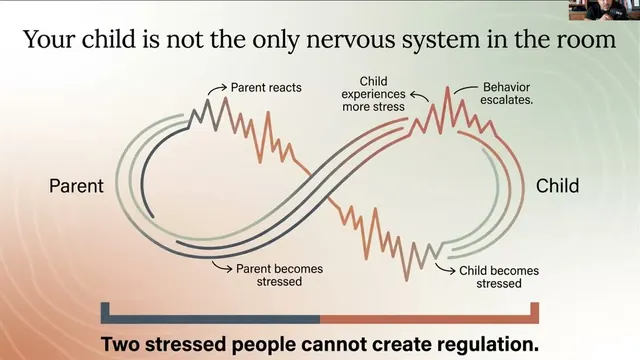
32:45Dysregulation is a predictable equation. I love this I love this because it's so true It's so true Let me tell you something that's really important as you're listening to me share this information I'm going to tell you the most important part of this whole this whole puzzle Is how I see it And how you see it The most important part of the whole puzzle Is what you're able to focus on Rather than get hijacked by Because dysregulation which means the child going outside of their window of tolerance for how much stress they can handle Is predictable. It's not random And it's not an explosion
33:42It is a build-up But we get conditioned That when the build-up begins We become stressed and we start trying to control it suppress it and change it Instead of trying to influence it and regulate it But the reason We try to control and suppress and change it Is because our limbic system is driving us When I say change your lens You have to stop seeing threat When you stop seeing threat You can do two things. Oh, there's actually a whole bunch of things you can do But one you can rely on your prefrontal cortex So you can think clearly and you can remember and two you can activate your heart Of curiosity and understanding
34:38Behavioral explosions are not random acts of defiance. They are the inevitable output When hidden trauma sensory overwhelm and temporal uncertainty collide Isn't that beautiful Redesigning the architecture of regulation Let me see what time I'm looking at. Okay We're probably gonna go an hour and 15 minutes Maybe an hour and a half Because I really would like to get through the slides, but if I start going too long I'll probably just end it and I'll do a part two and everyone that's registered We'll get notified of the part two We'll see. So let's redesign the architecture of regulation To solve the classroom crisis the crisis. We cannot simply manage behavior We must engineer emotional safety into the physical temporal and neurological blueprints of our schools
35:36Such a big statement Such a big statement to solve the classroom crisis. We cannot simply manage the behavior. We must engineer Which requires us to be able to think which means we can't feel threatened Which means we can't be stressed out. We must engineer emotional safety Into not just the physical not just the physical environment, but the temporal environment Which is the thinking environment. It's the emotional environment And the neurological blueprints of our schools We have to do that at all the levels. So now the trauma brain I've already been talking about it a little bit, but the trauma brain is the stress sensitive Fearful brain That's that's what you need to that's what I want you to walk away with today
36:31You've got enough complex terms to hold in your brain. I just want you to focus on stress sensitive and fearful Oh, man, that's so transformative That is so transformative. I had an opportunity To do a consult with a kid in a in another state just a few months back And i'm telling you because I can walk in with a framework for his stress sensitivity and his fearfulness I can navigate the relationship in a completely different way And see things that other professionals in the environment were not seeing Not knowing the kid at all beyond what paperwork I had received So if you walk away from nothing else the stress sensitivity The stress sensitivity and the fearfulness is going to take you so far So we've we've already touched on some of this so we have the brain
37:27Which is the child we have the child then we have the system So the brain you have to understand the neurobiology of the stress response and I was going to change it to the stress reaction um Let me say something Let me say something In fact Um jasmine knows what i'm doing I I can't I can't focus You're already talking about how many people I mean how many of you have kids that diagnosed ADHD? I mean I could very easily be diagnosed ADHD and look where I'm at They're gonna be okay They're gonna be okay. Don't you worry? We're gonna get through okay. Let's get back to your screen share
38:23Okay Yep, there you go. That's gonna be fine. They're gonna be fine They're not broken I'm as ADHD as they come And you know what let me tell you something all your parents with kids diagnosis ADHD Your kids are geniuses No one's telling you school can't tell you because schools schools are not engineered for genius Schools are engineered for children all learning the same way doing the same thing And getting the same results. They're not wired for genius all your children are genius You don't be you're not you cannot be a genius without being neurodivergent. That's the very the very Um definition of the word you have to be able to think differently You have to be able to think outside of the box if you're neuro typical There's no there's no ability to be genius. You have to be not neurodivergent
39:23In order to achieve genius Otherwise you won't think differently and if you don't think differently You're never going to go out into the realm of the universe and discover All of the other things that lie outside of the box that our society loves to bury kids in Oh gosh, goodness gracious. Okay
39:46understanding the neurobiology of stress reaction and why did I change that I changed that because there's a difference between A reaction and a response and I need everyone to understand it because it is so important because words matter a reaction Is without thought a reaction Is a neurophysiologic unconscious process that occurs automatically and it's driven by the limbic system There's no thinking involved when a child reacts If you've never read from fear of love, I encourage you to get it But there's a I I I tell the story about the mom Who wanted help and I was offering her help and she was being resistant to the help which let me tell you I don't I don't do a lot of that anymore If you're resistant to the help. I don't I don't I'm my time is very valuable
40:43And it's all I have and it's just going away So if I can tell you something and you can take it and you can think about it and you can implement it It's gonna work if you just want to argue and be defensive It ain't gonna work Go listen to 20 other 50 other webinars and just keep beating yourself Keep beating your head against the wall, but I'm gonna tell you if you want to help I'm gonna give it to you. I'm gonna tell you so in the book The mom in the lecture she comes up because she has a child who poops his pants and I'm telling her what to do To help her child not poop his pants and she's Resisting me and she's telling me that's not right for her son and she's like because I'm telling it I'm telling her transition is stressful. It's a reaction. He can't help it But if he has to transition to what the sensitivity of his brain wiring Causes him to poop his pants because you have neural you have neural circuitry
41:41Which runs from the amygdala down the spinal cord into the intestines And so a child who has trauma around transition And this child did when he has to transition he'll poop his pants and she'll say yeah, and I said that's why He's having an amygdala hijacking in the moment She says but that does he's just sitting in class and there's I'm sitting there talking to her. I go Bam and I slam my head down on the table and she jumps and I said that I said control it Bam and I hit it again. Oh, she jumped again and I turned all the way around. I was like Turn around bam hit the table. She's like, okay. Okay. Okay. Okay. I get it. I don't think she got it The point being you're gonna have to think outside the box. It's all there is to it And then there's a child
42:36Well, then there's the response response requires thoughts A response requires consciousness A response requires awareness If you're reacting to your child, you're not responding if you're reacting you're stressed There is a space between a reaction and a response And we all have the ability to feel that with breath And when we feel it with breath That took me three seconds We can respond instead of reacting So then we're reimagining the educational environment and discipline and what I'll tell you about discipline discipline
43:32The definition of discipline is to teach Not to punish True regulation requires an inside out paradigm
43:46So let's talk about the trauma brain how severe stress fundamentally rewires the architecture of human thought We have the amygdala. I've been talking about this. It's the threat direct. It's the threat detector pumps out cortisol Which is your chemical alarm system, which is your primary stress hormone and it suppresses the hippocampus Which is your memory system? Ladies and gentlemen Ladies and gentlemen Ladies and gentlemen I need to tell you something very important In times of stress Our thinking becomes confused and distorted and our short-term memory is suppressed Joseph LeDoux new york university neuroscientist author of the emotional brain says in times of stress In times of stress our thinking becomes confused and distorted and our short-term memory is suppressed We are talking about the classroom
44:42If you want to have a breakthrough in the classroom, you've got to get this Your amygdala detects a threat the amygdala releases cortisol the cortisol overwhelms the hippocampus The hippocampus is responsible for short-term memory When the short-term memory gets overwhelmed the thinking circuits Start to short out and go offline. And so that's what it's sending to the prefrontal cortex Therefore in times of stress a child cannot think clearly and cannot remember Man, man, it's so important And I have literally been screaming this from the mountaintop for 25 years
45:37Because it impacts everything that we do for those of you on here who are business owners It impacts everything you do. I just did a podcast a business podcast and the guy was was we were talking about this very thing remember There is a space between reaction and response and we all have the ability to feel it with breath And when you feel it with breath you become more conscious You become more aware You become more responsive and less reactive A dysregulated child literally cannot think clearly This is not me making this up. This is a scientific fact A stressed out child. It's all dysregulated child is a stressed out child. A stressed out child cannot think clearly
46:36Their cognitive access when they become dysregulated drops Then how can they learn they cannot
46:50Let's talk about the emotional age. I I could I could spend three hours on that The emotional age. Oh, oh my god. This is good The hidden disconnect between passing time and unprocessed trauma You are not dealing with your child's chronological age in the midst of stress You are dealing with the child's emotional age What you are seeing at the chronological what you're seeing at the physical What you're seeing at the cognitive age is not What you are dealing with You are dealing with the emotional age Because when the emotional memory system gets activated it dictates to all the other memory systems When the emotional system gets activated it dictates to all the other
47:45Memory systems I'll say it one more time When the emotional system when the emotional memory gets dictated gets activated It dictates all of the other it dictates to all the other memory systems You have a cognitive memory system an emotional memory system a motor memory system in a state level memory system when the emotional memory system gets activated it dictates to the state It dictates to the physical And it dictates to the cognitive So the terrified toddler inside the angry teenager Trauma halts emotional development causing a sudden invisible split between a child's chronological age and their emotional age when placed under stress I Swear to the good lord
48:41Above Not swearing the native way. I'm not swearing to the good lord above. I'm swearing across my heart hope to die To the good lord above Trauma halts emotional development And when stressed It causes a child to regress And acting out. How do you know a child is stressed out because they're acting out? Well, how do I know someone stressed? How do you know when you're stressed when you're not paying attention? How do you know when you're stressed when you're not listening to what people are saying when you're trying to formulate a defensive response? How do you know when a child is stressed when they're acting out because an acting out child is a stressed out child Is a regressed child
49:39You've got to focus on the emotional age Now I just heard someone's thought. I just heard someone's thoughts. I'm gonna back up Because I heard it Someone said I can't treat every child like a baby Oh That's such a fearful Reactive Confused thought Number one every child is not Expecting you to act treat them like a baby and every child does not want to be treated like a baby And here's what I want to tell my teacher brethren and sister in 70% of the children in your classroom really don't want to have anything to do with you They don't need you. They don't want you. They want the lesson
50:36They want to be given it and they want to be left alone and they want help when they ask for help But otherwise they don't want you dealing with them. You are an adult You are an adult Children do not want to be entertained by adults Children want to be entertained by other children. So when children are in a classroom 70% of the children Just need guidance and structure their brains operate in an effective enough manner that they will learn rapidly The child Who needs you? Is your stress sensitive fearful child? And guess what? And this is a cold hard truth The child who needs you who's the stress sensitive child who's the fearful child
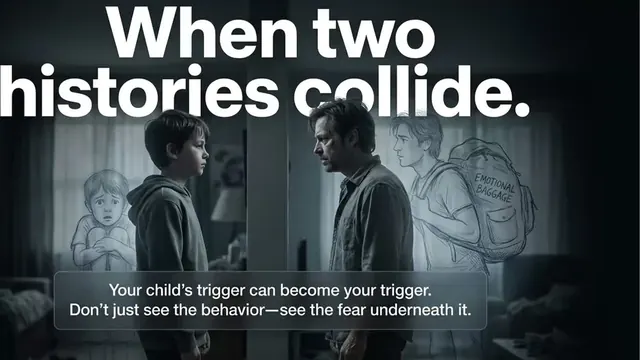
51:32Sins off a stress vibration now. Guess what that does That stress vibration stresses you and then guess what you want to do when it comes to being attentive to that child You don't want to do it. You know why because that child makes you uncomfortable Ouch That child makes you uncomfortable But see now you're here now we're going to have a breakthrough And i'm going to give you the way to do it the way to get through to that child The way you get through with that child the way you get through to that child starts with your own physiology Look at that child tomorrow. Look at that child and say what is it about this child that I can fall in love with? That's what you say What is it about this child that reminds me of another child from my from my past that I loved and adored? What who does this child remind me of because that's oftentimes a trigger and what is it about this child?
52:27I can fall in love with And let me tell you as soon as you as soon as you will hold your feet to the fire And answer that question What's going to happen is your prefrontal cortex is going to turn off And your heart is going to get activated Soon as your heart gets out it makes me. Oh my gosh. I'm such a sensitive. I told you You could it diagnosed me all kinds of things. I'm so sensitive I'm so sensitive. I can think about my prefrontal cortex turning off In relationship to a child and I can think about something about them that I want to fall in love with and my heart just Boom my heart just turns on. Oh my gosh who The child who stresses
53:23The child who regresses to their emotional age Is the child who needs you When you regulate that child all the other children will feel safe And then you create a regulated classroom Okay, let me keep pushing An acting out child is a stressed out child is a regressed child Behavior is not a conscious choice. We're punishing We're we're punishing what we interpret as a conscious choice So we're punishing children with our points and rewards and with our consequences because we we are assuming in our own confused and distorted Thinking we're assuming that they're doing something consciously, but they're not they're doing something Unconsciously so you end up punishing an unconscious state It's an involuntary neurological regression triggered by a distressed nervous system Oh god
54:19geez This stuff isn't good. My goodness Let's talk about part three. Now again, I could go deep into this I could go deep into this, but I I feel like most of you are you you're you're lined up with me I think this is uh, I think this is hitting home
54:38Post I have a quick comment. Um that I wanted to see if you could Yeah, going back. [A parent asks about a young child's toileting accidents.] um Okay I'm gonna I'm gonna address that real quick because if I get off on questions. I'm never gonna get through. Um I'm never gonna get through this So How was the child now? Five five. Okay, perfect. Okay, so He had So he was he was His system did not have time to fully develop number one
55:35Oh, that's important. His system did not even have a chance to fully develop Number two What are all the circumstances that went into that immature system and and him being premature? So then you've got that and then you've got three. So you've got whatever happened whatever happened from birth up to five That's so you have all that layered in there. So you still have An immature system. So what you've got to do what you've got to do Is number one transition The most stressful thing that there is for him. So transitions are going to be very stressful It's not conscious Get it get them a pull up get them a pull up Remember know that they're know that they're stressful Okay, so then what you have to do is you have to be conscious
56:31And see a lot of the work that I teach a lot of the work that I teach requires us as adults to put in energy A lot of the conventional traditional parenting tools and things that you've learned don't require you to put in energy And that's why they don't work. That's why children get older and they don't get better Well, we're we're not going to let this happen. Okay, so you're five year old You're going to put in energy. So you're going to have to think before the day begins think about all the transitions So here's what I'd even ask you to do. I'd even ask you to go do a day or two or three Changing nothing. I don't want you to change anything. I just want you to pay attention To the times when he's likely to poop his pants. That's all I want you to do So I want you to pay attention to the times when it's likely when he's likely to Poop his pants because now when you're doing that I want you to make a note because now you're dialing into the transitions
57:28And then the next thing I want you to do is I want you to to have a nurturing connected Emotionally driven conversation around with him around his in utero experience And I want you to be rubbing his little belly while you're doing it I want you to tell him how stressful it probably was for him In utero and you have to explain that So if he doesn't know some kids don't know they're adopted So if he doesn't know he needs to know this he's going to need to know this Because you're going to have to say in your biological mom is tummy You weren't my tummy. You were in her tummy when when you were in her tummy Maybe he was in your tummy out maybe he's your biological child Your your your little tummy didn't have a didn't have a chance to get strong So now it's still very weak and here's all the reasons it didn't have a chance to get strong because it was so scared
58:23So scared Your little tummy was so scared your little tummy's been so scared for so long and you're so sensitive You're so sensitive that every time we go to do something Every time we go to do something it just it stresses you out. It makes you scared You get sad and your your little tummy is not strong So you end up pooping your pants because your little tummy doesn't know that you're going to be okay Jesus uh You're going to have this conversation with him And then you're going to start paying attention to these transitions And as you're paying attention to these transitions What you're going to start doing is you're going to start interrupting the transitions by saying hey, hey buddy little guy baby sweetheart In five minutes and ten minutes. We're going to go do this And as soon as you say we're going to go do this and you're going to say and I know it's going to be
59:20I know it's going to be stressful. It could be scary, but everything's going to be okay I got you. We're going to be good You need to go to the bathroom And so you're going to start preempting preempting one first with words It's all with energy, but first with words that that we're going to make this transition. It's going to be okay You're safe. Everything's going to be okay. And then you're going to say do you need to go to the bathroom And you you get him make sure he knows that you're asking if he knows needs to go to the bathroom because he may need to go And if he goes that's fantastic because because you you gave his little tummy a warning Then you took him to the bathroom. He went to the bathroom and then you're able to transition able to move one And after you get through the transition, you said you're okay We made it We made it and then I want you to I want you to every time he's able to get through a transition
1:00:18Every time he's able to get to a through a transition I want you I want you to take a moment And I want you to get down on your knees and I want you to say to his little tummy And I want you to say I want you to say to his little tummy. You're okay You're okay. Mom. I can keep you safe We're gonna get through this It's gonna be okay. It's gonna be I'm so proud of you're so strong. You're such a strong You're such a strong tummy Now I want you to I want you to speak that over him. I Want you to speak that over him as much as you can. You're such a strong tummy and you don't have to be scared Mom has got you. We're gonna be okay If you if you'll do that if you'll do it, please not if please do that
1:01:13Please do that for the next 30 days And then send us an email, please support@feartolove.com or send me an email. [personal email address removed] Send me an email 30 days and tell me what happened. It's probably gonna take two weeks in two weeks in two weeks You're gonna be surprised what happened. That was a good jet. That was a good one. Jazzy Okay, let me get back to it let me get back to it Okay
1:01:58Compliance culture public behavior systems and color charts induce shame He's gonna be really hard because we use these things with so so So many classrooms use these things public behavior systems a Point and reward chart in a classroom is a public behavior System color charts are public behavior systems. So they induce shame So when children and here's for my teacher brother brethren and sister in here's what I want you to think about How many of your 70% of children in your classroom get their colors changed they don't
1:02:54And if they do if they ever go from a green to a yellow they never go to a red How many of your children how many of your 70% of your children don't get their special treats? How many of your 70% of children don't get to go to recess? How many of the 70% of children don't get to go out on the special outing? They all get to go They all get to go Because they can regulate their brain because they have an oxytocin response that is healthy But you're 30% you're 30% you end up punishing them you end up shaming them You end up making them feel abandoned you make end up making them feel scared and guess what you're doing You are reinforcing the problem. That's why these children grow older, but they don't grow better So schools unintentionally recreate trauma dynamics Traumatized child enters enters a stress state
1:03:49Traumatized child acts out they regress the school applies shame based systems or isolation the amygdala detect system Systemic threat cortisol spikes, and it's a negative feedback loop that goes over and over and over and over again So the goal now let's get into this real quick Alright, we're doing alright The goal for behavior modification is compliant. It's compliance But what if we change the goal for focused on instead of behavior modification? What if we're focused on healing fear and now I just heard a teacher say it's not my responsibility to heal a child guess what? If you will seek healing the teaching will come If you will seek healing first the teaching will come if you will seek Relationship first the child will feel safe a child who can feel safe as a child who can learn if you will seek connection first
1:04:49correction will come But when you don't when you don't when you put it all on the behavior Modification in the behavior management you are losing this child and not a single one of you as teachers showed up In this profession to lose children you didn't do it But you've got stressed out environments and you've got stressed out schools that don't make it easy for you And then you have your own families But you showed up to make a difference in the lives of kids Not to stress them out more, but you didn't know you didn't know you were stressing them out more until now and You can change it you can change it instead of compliance focus on connection Instead of shame and isolation and punishment focus on safety and co-regulation The timescale behavior modification changes behavior temporarily
1:05:45Healing fear fosters long-term neurological healing the biological results suppress the child comes the trauma brain True regulation starts from the inside out We cannot modify behavior until we heal the fear You have to reduce the stress reducing the stress starts reducing the fear by redesigning our systemic environments to lower cortisol and soothe the amygdala we allow the child's true Chronological and cognitive age to enter when you can help the child get out of survival mode You can help the child to think and to learn and to function So you've got it. You've got to approach this with deep compassion deep compassion replaces judgment But when you're focused on the behavior that all you can do is judge it
1:06:41You've got to see underneath the behavior to the stress and the fear that the child is dealing with You've got to go back go go talk to the school Psychologists go talk to the parents and find out what the child's history is. I can't tell you how many schools I've advocated for children and the schools in the IEP in the IEP rooms and The school counselors don't know about the early histories that this child has We share these histories not to judge them, but to understand them It becomes so important and when we can finally understand the neurological architecture stress punishment stress punishment becomes obsolete Who stop punishment stop punishing? So the science of regulation The truth and I'm giving you these contrasts So so you can you can look at one side and look at the other and just it's just a fine line
1:07:38But you can the traditional model focuses on behavior The goal is obedience and it uses correction to force compliance the neurosequential model focuses on the nervous system Focusing on the goal is to create regulation and it builds connection to build safety So when you when you're focused on a regulatory model, you're focused on the nervous system The goal is nervous system regulation and it uses connection to build safety and when the child feels safe Then the upper-level Executive functioning areas of the brain can come online the short-term memory can come back available The goal is not obedience the goal is nervous system regulation So you have safety first regulation proceeds cognition This is such a big statement If a child is dysregulated until that dysregulation is brought back within the window of regulation
1:08:35They are not going to be able to think clearly Why stress children cannot access memory function or executive function is because cognition is Structurally inaccessible until the lower neurologic tears are secured Until a child can be brought back into a regulated state. We cannot even reach the epitome of cognition We have to have safety and regulation first to even get to cognition So it's connection before correction. You have a dysregulated child. You have to correct first. You have to connect first And when you connect first you create safety when you create safety You open up the doors for education and learning to happen when you don't focus on connection first But you focus on correction then what happens is you are you are
1:09:36Holding hostage the ability for the child to be educated and to learn and what is the best Single freaking example you have for this than the five-year-old child or the seven-year-old child with the ten-year-old child Who's getting expelled from school? If you're getting expelled expelled from school, you cannot learn effectively you cannot learn effectively You have to be willing to co-regulate and this is where the adult nervous system The teachers nervous system comes into place teachers Teachers teachers you have you have perhaps next to parents. You have the hardest job there is and You have 30 kids in your classroom You have to have a regulated nervous system The reason is because all of the children in the classroom are Borrowing from your nervous system now. I'm gonna say something really important to all of you
1:10:35And I know we might not even have a lot of teachers on here I know we have a lot of mental health professionals. I know we have a lot of parents I'm gonna say something I want you to hear this
1:10:49Be of the child's favorite teacher how many of you remember your favorite teacher. I Just I felt it felt like fireworks going off in my brain because all of you like pop pop pop All of you dialed that one in We all remember our favorite teacher Your favorite teacher had the ability to create Resonant co-regulation Your favorite teacher had the ability to regulate every kid in the classroom Your favorite teacher had the ability for all the children to feel safe They had the ability for all the children to feel regulated and then The children who could accelerate academically they accelerated on their own just because of the presence of the favorite teacher. I
1:11:44Remember with our favorite teacher sometimes Mrs. Tipton miss Fritz my favorite teachers Sometimes the kids would just be up around the desk Because they just wanted to be around the teacher. I remember this vividly in the fifth grade the kids were just all up around Mrs. Fritz's desk And Miss Tipton everyone love Miss Tipton become the favorite teacher because the favorite teacher has the ability to co-regulate Emotional contagion versus oxytocin breathing and present when a child is distressed you have to calm yourself down When you're calming yourself down when you're breathing When you're breathing you're turning on oxytocin when you turn on oxytocin not only are you creating reduced anxiety for the child, but you're creating more presence
1:12:39Pre-req the prerequisite for co-regulation you cannot regulate a child while dysregulated that's important You cannot make a child feel safe when you're not feel safe when you don't feel safe So you have to get really honest You have to get really honest about keep about getting yourself to a place that you feel safe And if you don't feel safe you have to acknowledge that for yourself And you have to take a step back and you had to take some deep breaths And you have to remind yourself that you're okay, and if you really don't feel safe go get support Go get help and then after the situation is done After the situation is done then review it Review it and determine. How can you stay in a regulated place? Because the adults in the classroom become the emotional environment. It's the it's the force of co-regulation It becomes really important. So physical safety does not does not equal emotional safety
1:13:36Locked doors safe materials behavior rules physical boundaries don't equal physical safety physical safety is predictability It's warped its repair and its emotional containment Reducing the space that the child has to feel threatened in so the emotional containment is really important Emotional containment is if you have a child who's prone to stress in the classroom Bring that child closer to you Touch that child more Stand next to that child more often when you are when you are teaching the rest of the class Make more eye contact with that child meet that child in the morning when they come into the classroom give them a hug Make sure that child has some snacks if they may be hungry. That's all goes into emotional containment So you've got to be able to create knowing what's going to come next for the child You've got to be able to create a feeling that the child feels loved and accepted by you Children who don't feel loved and accepted by you feel like you're a threat if they feel like you're a threat
1:14:35It is going to go it is going to lend itself towards an already easily hijacked amygdala They got to be focused and grounded and they got to feel like they get your attention and then when Conflict happens because it will happen. You've got to be willing to repair it and you repair it simply By saying I'm sorry. We had a tough time today What could I have done better? What are you going to be doing this evening? Is everything going to be okay? I? Look forward to seeing you tomorrow. It's going to be okay Hey post. Can you share your screen real quick? It seems to be kind of blue on my end Oh That's A participant's camera. So a participant's camera has hijacked the presentation. How did that happen?
1:15:33How did that camera hijack the presentation? She's sharing [a participant] sharing Okay, so I don't know how that we got to figure that out in the settings All right, we get back to it
1:15:52All right, we're gonna be wrapping up here pretty soon guys So some classroom attachment rituals greeting rituals establishing safety at the threshold. I love this I love it when teachers meet the kids at the classroom You if for your for your child in the 30% meet them at the front door Meet them when the parent drops them off Connect and you will know what if you can't connect if you can't connect with that child at the beginning of the day Guess what simple formula? It's gonna be a bad day I'm gonna say that again if you can't connect with that child at the beginning of the day So that child comes into the classroom and they're frowning and they don't want to hug you and they say leave me alone If you don't give that attention, it's gonna be a bad day. I Would call I would call full attention to that. I would start in my classroom
1:16:51I would have the all the kids Become little Jedis and when there's a child in the classroom who's really struggling I'd have all the kids close their eyes and send him good vibrations Good vibration good vibrations Make sure he has a snack take some extra time Take an extra two minutes. See this is gonna save you two hours take two minutes to say buddy Looks like things aren't okay. Did you have a rough night and you had a rough morning? What do you need? What can I do support make eye contact eye contact is so important, but you don't have to force eye contact See eye contact is one of the most direct ways to stimulate the frontal brain So when you make eye contact with a child, it really lights up the prefrontal cortex
1:17:46So if a child's already stressed out, they can't make eye contact So you don't want to force it, but you want eye contact to be available because eye contact can be soothing, but it can also be stressful Emotional attunement reading and matching the child's underlying state Consistency proving the safety is permanent and not conditional Alright, okay, the orchards hitch are assembled here we go the adult nervous system is the foundation The adult nervous system becomes the foundation creating predictability warmth rituals Predictability warmth and rituals emotional contagion and Co-regulation so Everyone's feeling good because remember emotion good or bad is contagious and now we learn Now we learn so what are the rituals?
1:18:43What are the predictability and the warmth rituals that we can do and what how can we create that generate that emotional containment create that Co-regulation Before we focus on learning so that now we can learn effectively Learning requires safety. You are the environment. So some practical trauma responsive classrooms We have learned we can create learning zones. Okay, so first you have the temporal architecture That's the time the transitions and the rhythm. These are the things you have to pay attention to the spatial architecture My good friend Dr. Alicia Williams, who's executive director for Love Pathways. This is her specialty She does some webinars on creating therapeutic environments So this becomes very important. So if you're school reach out to Dr. Williams She has great material and we do webinars on she does some webinars for for Fear to Love as well
1:19:40I'm just talking about the spatial architecture That's that's creating the environment the containment the sensory input and then the relational architecture That's the co-regulation. That's the discipline Remember the definition of discipline is to teach not to punish and it all starts with Connection so all three of these things you got to get them in the sink You got to get them in the rhythm By designing the school experience across these three dimensions We shift the focus from controlling the student's behavior to regulating the student's nervous system Okay, there we go. So If we can if we can lower the physiologic threat We can Increase the duration of time that the child stays regulated
1:20:35And the more the more longer the child stays regulated the more effective they can be in the classroom But if the child is dysregulated our truly our only goal is to get them back into regulation Regulation is built in transitions without preparation And in adjustment the change a simple schedule adjust adjustments and structure a simple schedule Change is processed by traumatized brain as a sudden threat So we have to be able to focus on creating that structure becomes very important You prepare and remember we're talking about the 30% but all your children are going to benefit So we're we're able to bridge We're able to bridge A transition is not just a change in schedule. It is a carefully engineered pathway designed to prevent physiologic free for all
1:21:30So you have the visual schedules. You have the transition warnings You have the soft starts and you have the walking support So you might have to walk along and engage and be present Okay, I'm gonna skip over that one. These are going too long. All right So redefining discipline through the lens of nervous system time out Is isolating time in is connecting time out increases fear time in increased calm's fear Time out is punishment hallway banishment Time in co-regulation and emotional coaching hallway walks regulation corners Sensory resets time out is buying compliance time in is about nervous system reset Do time out do time in instead of time out and you can do time in just connecting a hug A pat on the back make an eye contact time in does not have to be that complicated
1:22:26It doesn't have to you don't have to get overwhelmed by it And I prefer that you that you're instituting prevention Before you have to even get to intervention time in ultimately is intervention But you can also use time in in a preventative way Connection comes fear physiologic the fear through physiological co-regulation We've been talking about this so a time in leverage the study physiology of the adult So time ends Regulate the stress of the child. This becomes very important. Some of you need to have aides in the classroom and the aide isn't Here's my suggestion. The aide would not be To take the dysregulated child out of the classroom The aide would be to keep the dress the class regulated while you as the primary teacher take the child out Because the child needs to feel more safe with you than they do the aide
1:23:21See, this is where most classrooms get it wrong. They think the aide is to focus on the child That has the dysregulation, but the aide's not, the aide is there to lend support to the teacher So in the instance the teacher needs to needs to take the child out of the classroom The teacher is maintaining the regulated presence for the child and becoming the safety figure for the child And ultimately becoming the effective co-regulator All right Okay, man. I told you this was long. I'm probably gonna I should have probably just What I probably should have just done Is um, let me look at this for just a moment. Let me see where I'm at Yeah, well Yeah, oh I'm gonna have I'm gonna have to I'm gonna have to come I'm gonna have to do a part two on this
1:24:16um Let's pick I'm gonna pick up right here with the uh, re reimagining the Reimagining education and we're gonna kind of wind this down Yeah, it was long Sorry about that. I didn't realize quite how long it was But this is all gonna go in the book. This is all gonna be going in the book so
1:24:46Let's get let's get back to re reimagining education Okay, children do not need more control. They need more safety The legacy and sneak tighten parameters Out of fear. That's what we typically do And then what happens Instead of focusing on control. We need to move to safety Focus on trauma responsive reality expand psychological safety to reduce behavioral friction So we will we want to expand the psychological safety to reduce the behavioral restriction And that's where the connection before the correction becomes so important So moving from compliance to confidence Creating safety resilience and connection emotional intelligence and emotionally safe discipline When you remember that the definition of discipline is to teach not to punish Then that's when you realize that you have to create safety first before you can get to the real true compliance that you want
1:25:46Okay Oh, man My goodness isn't this a lot structural keystone the child who finally felt safe. You got regulated rooms You have sensory design. You have trauma responsive leadership and you have restorative environments So the the one regulated adult can change the trajectory of a child's life This is not just for the classroom. This is also For the home Just the one rate the intervention of the one regulated adult you make the connection you see the connection You feel the space between reacting responding with breathing You turn on the oxytocin You calm down the brainstem And you open up the heart and that's going to be the key. Remember every day counts Every day counts every day the brain is changing It's either getting reinforced in a negative way or it's getting enforced in a positive way
1:26:42We want to enforce in a positive way. We don't want to continue reinforcing negative Um, so for those of you, I might have some families on here who may be struggling I may have some professionals that want more of this information. You might want to do more We have like I said earlier earlier We have wraparound programs Love Pathways and LEAF Wraparound if you're in order there in california And you're at you have an at-risk adopted placement. We can help So anyone any of you can go here and you take the pathway finder So go to feartolove.com take the pathway finder. It's going to ask you a few questions It's my ai and it's going to give you the direction that you need to pursue If you're a professional in here, you might want to look into our Fear to Love certification There might be different education that you might be interested in we could have there's there's some webinars that I've got I want you to continue to be in a part of the feartolove.community because we're just going to continue to educate That's what we do here provide education
1:27:39So go here to the pathway finder at feartolove.com write that down feartolove.com jasmine put that in the chat, would you? And then you can just people can just click on it You answer the nine questions are going to get a personalized map. So here's the final output. Okay the final output is Reimagination reimagine education build human beings not just compliers We have to create hope We have to create healing and we create love Because that's our ultimate goal Hope healing and love Whoo. We that was a lot That was a lot Okay So there's the the feartolove.com path finder Be sure to go there. Check it out Take a look. We are right at an hour and a half
1:28:37I'm gonna go ahead and stop share That was a lot So that's it guys. I appreciate your time and your attention Go to the path finder. If there's anything that we can do for you. Let us support you So take that feartolove.com path finder forward slash path finder If you have anything that any way that we can support you you can almost always email us a support at feartolove.com But uh, we're here for you. God bless you. Thank everyone for being here and um Be on the lookout for part two everyone that showed up here We'll get notified of part two and we'll go a little bit deeper And then as soon as we can can get this book done We're gonna have a full course. We'll give you guys access to all of that So god bless you. Have a great day and we'll see you on the next webinar