
Parenting Adopted Teens
A trauma-responsive webinar for adoptive parents navigating defiance, shutdown, and the fear of losing connection during the teen years.
Presenta: Bryan PostGrabado en abr 2026105 minInglés · Subtítulos (CC)
Lo que aprenderás
- Why being trauma informed is not enough: citing Joseph LeDoux, Bryan Post explains that stress confuses our thinking, so parents need to be trauma responsive, knowing how to respond in the moment.
- Your teen's brain is still developing (not fully mature until about 23 for girls and 25 for boys, even without trauma), and teens are built to pull away as they form their own identity.
- Behavior is the language of stress, and “what we call tough love is often just our own panic,” which traps parent and teen in a storm loop that you break by changing yourself.
- Sit in the middle of the storm: tell your teen “I love you. And doing that thing scares me,” so you stop being the threat and they can come back for support.
- The three pathways of emotional expression and what to do with each: ignore the attitudes, encourage the feelings and work through the behaviors, because “the feeling is the path to the healing.”
- Connection before correction in practice: pause and take three to ten deep breaths, use small words instead of lectures (“Tell me more”), and talk about the rules later, when everyone is calm.
Transcripción Ver transcripción completa +
0:00do do do. Do do do. Good morning. Good morning, everyone. Good morning. Good morning. This is our our title today from fear to freedom how to parent your teen without losing your connection. How awesome is that? So we've got few people still popping in. So as you're jumping in, tell me where you are from. Tell me what what what state you're from. I know I had some I had some of my brothers and sisters from from the UK wanting to join in and it's 11 o'clock. I'm here in Texas. I know you got a lot of you all are in California. Here we go.
1:00There we go. All right. Fantastic Netherlands. There's some UK folks. All right. Actually, we we tend to focus these mostly around California. But as I start doing more Fear to Love stuff this year, we'll we're going to start opening these up to throughout the United States and throughout the world. And actually, I am working on a project to be doing probably a webinar every week for therapists. So that's something something I'm working on. I hope everyone's doing great feeling blessed this morning. Let let's go and go ahead and jump in and get started. It's a very important topic. Let me see here. I usually do this. See, I love the idea of doing this as background, but a lot of people watch a watch this
1:55presentation from their phone. So I've noticed when you watch it from your phone, it changes the slide. So I'm going to go ahead and do it like I usually do. And Jasmine is in the in the the chat. So as you have questions, and as you you post your your information there in the chat, Jasmine will be seeing it feel free to add questions. We will I'll I'll find my zone and start flowing. And then as I do that, she'll interrupt me if it's a really important question. If it's really important, and it just cannot wait, she'll just interrupt me, which is fantastic. I don't mind at all. But otherwise, I'm going to make sure that we have some time at the end of the session today to answer some questions. So I typically go about an hour if I don't start
2:51rambling like I have a tendency to do. And then we'll leave we'll leave some time for some for some Q&A. All right. That sound good, everyone? Yes or yes? Fantastic. Okay, I think we had like 160 something people registered for today. So let's go ahead and jump into this bad boy. So from fear to freedom, how to parent your teen without losing your connection, or your mind, or your sanity, everyone knows that parenting teens is very, very challenging. And let me tell you something weird about me. Just let me start this off right off the bat. When I first became a parent, 30
3:46years ago, 31 years ago, I the time and this is so weird. And I don't even know how it occurred how it got programmed in my brain. But the time I was looking the time the two times I was looking the most forward to when it came to parenting was when my child was two and when my child became a teen, those were the two times I was like, those are the two times. And I think it's because people always talk about the terrible twos and the terrible teens. And I'm like, I'm not gonna, I'm not gonna attract that. I'm gonna look forward to the twos and I'm gonna look forward to the teens. And you know what? It was okay. So I'm looking forward to sharing that and much more with you. I for those of you who don't know, my name is Bryan Post. And
4:44I've been doing this work a long time. I am an adoptee myself. I was in foster care. I'm also an adopted father, a biological father, founder of LEAF Wraparound, international speaker, 25 years of working with adopted foster families, and a pioneer trauma responsive love, love based parenting. And
5:06let me tell you about that trauma responsive. Most people talk about being trauma informed. And then that's like, over the last, over the last five to 10 years, that's kind of been a buzzword being trauma informed, everyone likes to talk about being trauma informed. Well, I started teaching trauma informed 20 years ago, like almost my entire career, I'm 52 years old. But since I was 27. And I started my first my first private practice when I was 25. So I and I've been a social worker since I was 21 years old. So this is what I've done my entire adult career. But when I was 27, that's the first time I started really delving deep into attachment and trauma and adoption and foster care. And that set me on a path. And so I was I've been teaching trauma informed for 25 years, or 2020
6:05something 20, yeah, 25, yeah, 25 years, Godly seems like so long. And so over the last the five to 10 years, when people started talking about being trauma informed, I'm like, wait, wait, wait, wait, wait. It's too late. It's too late. trauma informed. That's that was that was 20 years ago. trauma informed is not enough. It is not enough to be informed about trauma. I can sit and talk to you ad nauseam about the brain and about all the different aspects of the brain and all the different traumas and all the things that children go through. And you've experienced this as parents. And I let me say, we have a lot of professionals joining us today, but most are parents. And this presentation is for parents. So parents and professionals alike, I love you all. For for my professional brother and sister. And this is an opportunity for you to hear how I apply the Fear to Love
7:01methodology to the parents that we serve. And also to hear what many of your parents may be going through that you might not have already known. So I'm glad to have you. But this this presentation is specifically for my parents. But you're gonna everyone's gonna learn something. So I'm like trauma informed is not enough. And let me tell you why. I'm gonna tell you why. Being trauma informed means you are informed about trauma, which is a cognitive perspective. It is a logical or is a rational is a left hemisphere. It is a thinking perspective. This is very important. Probably the first, the first breakthrough thing I'm going to tell you. And if you write it down, if you remember it, it could change your life. So your trauma informed. So you know about
7:59the head knowledge, people professionals love to do this little wrap your finger around your brain to show the amygdala in the front. I'm like, Oh, God, stop with that crap. Oh, let me tell you why. Sometimes I'm just a little bit nutty because I've spent so long working with families all around the world in their homes. It's like the majority of my career. I've only gone into living rooms. And so it's like my my paradigm for doing this work. Oftentimes feels so dramatically different than than if we were just working in an office or if we were just doing virtual, which is a big thing now. But let me tell you why trauma informed is not enough trauma informed is not enough because trauma informed means you're informed about trauma. Well, Joseph LeDoux, New York University neuroscientist wrote a
8:57book called The Emotional Brain. I need you to hear this. You should write this down. If you're not taking notes. Now, if you're driving listening, this is fine. And we will send a replay. I do believe but take notes. Joseph LeDoux, New York University neuroscientist wrote a book called The Emotional Brain. And in that book, this came out 20 years ago. He said there's so many great books that came out 20 years ago. And that was a decade of the brain, you know, the 90s. That was right off after the 90s. The 90s was considered the decade of the brain. He says in times of stress, our thinking becomes confused and distorted. And our short term memory is suppressed. In times of stress. Now, listen to how this works. In times of stress. So what you know, what you know, what you've heard, what you've learned in times of stress, our thinking becomes confused and
9:57distorted. And our short term memory is suppressed. So what you've learned, what you know, what you've thought, guess what happens to that when you become stressed? When you become stressed, you become misinformed. So no longer, no matter how trauma informed you are, the moment you become stressed, you become trauma misinformed. So I started saying, and you'll see this now, this is the benefit of being a pioneer of this work is that I'm typically ahead of trends. And then I typically end up saying things that end up, you know, five years later, that's the common thing. But you'll see right now, on LinkedIn and on Instagram and social media, professional saying, trauma responsive, because it's not enough to be informed about trauma, you have to know how to respond to trauma. Okay, so it's not enough to be informed,
10:55you have to know how to respond. Because if you don't know how to respond the moment you become stressed, and your thinking becomes confusing, distorting your short term memory suppressed, you can't remember anymore. So now instead of being trauma responsive, you're being trauma reactive, because most of us have experienced a lot of trauma, but that's a whole nother talk for a whole nother day. So I hope you get the point of where I'm going. And here's what I want you to know. Love is the most powerful healing force in the universe, if ever, I need you to hear this. And it's it befuddles me because I've been doing this for I've been speaking for 25 years. People will still come up and say to me, I can't believe as a professional, you talk about love, I'm like, Oh my God, why would I not? Why would I not talk about love? Love is the most powerful healing force in the universe. The only time healing has occurred has been as a
11:53byproduct from the power of love. Now, here's the thing. Here's the caveat. Most of us grew up experiencing fear disguised as love. We grew up experiencing fear disguised as love. So then when you hear people say, well, love's not enough and I love him and I've loved him and I'm doing tough love and all this other jibber jabber that ain't love. That's fear. But because we've grown up experiencing experiencing fear and we've disguised it as love, it's been disguised as love that after generations of conditioning, that's what we think we think being fearful is being loving and they are two completely different things. Man, y'all are in for a treat today. So here's Fear to Love. I've actually written 22 books and
12:53Fear to Love is my highest seller. We've sold a million copies of Fear to Love. Great Behavior Breakdown. I think we've sold something like 400,000 copies of that and then I have books. I've I've written so many books. I have books that are out of print. I sometimes only remember all the books that I've written. So I say all that I only say all that to help you understand that I understand what I'm talking about. I understand what you're going through. I understand your challenges and your experiences because I was also your teenage child and I had a sister who was a huge catalyst of this work and she was your teenage child. Between my sister and I, we probably covered the gamut of what you are experiencing with your teenage child right now. So I don't just talk as a clinician. I talk as a person as a human being who has lived this experience, gone through it was birthed in was birthed into this
13:49experience. It has a lens and a paradigm to be able to show you something different and that's my entire goal of the entire day is if you've been struggling at whatever level you've been at. If you just look for a you're looking you're looking for a breakthrough, you need a breakthrough. I am just wanting to expose you to a different way of thinking which will lead to a different way of feeling which would lead to a different way of being and really it is it is feeling and then thinking and then being. See cognitive behavioral psychology when it comes to work with these children, you need to throw it out. You need to throw it out because cognitive behavioral psychology says that your thinking changes your feelings which changes your behaviors but that's actually wrong. Why do I say that? Why do I say in
14:45the face of 100 years of therapy and psychology theory? Why would I say that? Because those theoretical models formed by Aaron Beck and Albert Ellis and a lot of other luminaries in the psychology field, they didn't have the decade of the brain. They didn't know what I just told you that in times of stress, your thinking becomes confused and distorted in your short-term memory suppressed. So, if cognitive behavioral therapy was going to be effective, it would have to be effective beyond the confused and distorted thinking in the in the suppressed short-term memory. That's why it's not effective for our stressed out, overwhelmed teenagers. Okay, so your points and your rewards and your behavior modification and your consequences, throw it
15:40out. Now, you don't have to. You don't have to but I'm telling you, I'd rather you do nothing than do those things because those things are only going
15:50to make it worse. Now, can anyone tell me what this is? Can anyone tell me? What's it look like? It's not a trick question. I promise you it's not a trick question. This is a picture from last night in my house and you know what it is? This is probably some kind of iced matcha latte from Seven Brews, a coffee place here in town and as you can see it is three-fourths of the way full. This is probably an eight to ten dollar drink. Now, why is that relevant? Let me tell you why it's relevant because the owner of this eight to ten dollar three-quarter full matcha ice matcha latte
16:45is my seventeen-year-old child. Soon to be eighteen all five-foot tall of her. She's going to be eighteen in July. She's the owner of that three-fourths full drink. She's seventeen soon to be eighteen and let me tell you about this three-fourths full drink. When I see this eight to ten dollar three-fourths full drink, it drives me batty. You know why? Because this is not the first one. This is not the first one. I see them all the time and I'm like you. [nickname], that's her nickname. Real name's [name removed]. [Nickname], you forgot your drink. Now, why do I say that? Now, I want you to think about this for a moment because I have a father who worked in a rock quarry from five in the
17:41morning till three in the afternoon. Every single day came came home covered in limedust and we always had enough. We didn't have we didn't have an abundance. We didn't have extra. We had enough. The thought of us having received a eight to ten dollar beverage that we only drink a quarter of is beyond my comprehension. I come from the clean your plate era and no that is that does not make it right and here's the thing I want you to understand. I'm not justifying any of this. It doesn't make it right. That's the era I came from. So, about four years ago, I took my daughter to Starbucks. Remember, she's five foot tall. Literally,
18:38she's five foot tall. This isn't her. She's five foot tall. She's short and half the time I still treat her like she's ten because she's so short and she's so sweet. She's got such a soft little face. I took her to Starbucks. I said, what do you want? Let me go get your coffee. What do you want? Um I want a grande iced matcha latte. No, she said a venti. A venti. A venti. A venti. A venti is as big as your face. What do you need a venti for? What? I'm not. No, I'm not going to spend twelve dollars on a venti iced matcha latte. That doesn't make any sense. It's bigger than your face. Why would I do? I'm going to get you a tall. I'm going to get you a tall. Oh my god. She got so upset and I think I think parental guilt set set in and I got her a grande
19:35which is the medium, right? I did not get the venti. It's ridiculous. I got the grande. Oh, you would have thought. I told her that she was banned from Starbucks and Seven Brews for the rest of her life. I mean all the attitude, all the feeling. I got the drink, gave it to her, got my drink. I'm drinking. She set her drink down. She didn't touch the drink. She didn't touch. She protested. Did not touch the drink. Got to the house. I brought the drink in. I set it on the counter. She didn't touch the drink. She was protesting. I did not care. I was not going to buy a venti drink for a child I knew was only going to drink a quarter of it. Made no sense. My father rub. God bless his resting soul. Would have been rolling over in his grave. That was four years ago. At least
20:35four years ago. Fast forward. I think I eventually poured the drink out. She didn't drink any of it. That's fine. Don't drink any of it. I'm not gonna buy another one. I will not buy another one. And if I do buy another one, it will not even be a grande. It will be a tall because I do not trust that you're gonna drink it. Fast forward four years, folks. And this is last freaking night. It's the same thing. You know what the difference is? She's got her own money. And she tells me it's my money. I'm like, but it's such a waste of money. I can do nothing. I can say nothing. It does not matter. It does not matter. It does not matter. It does not matter. It does not matter. There's still a three quarters large iced matcha latte driving me batty. And you know whose
21:34problem that is? It's mine. It's my problem. It's not hers. It's not hers. It's my problem. You know whose work who has to do the work? You know who has to get over it? You know who has to live with it? You know who has to be the it could be a lot worse. Not her. You know, right now, she's probably asleep. She's probably probably dreaming of swimming in iced matcha lattes without a care in the freaking world. And you know whose problem it is? It's my problem. It's my problem. And this is very important for today because you know what? Something I've learned and I want I want you to understand this. I want you to understand something. I'm going to just stop the share for a minute because it's this important. Something I've learned is I can b***h and I can moan and I
22:30could cuss and I could fuss and I could threaten and I could shame and I could demean and I could take away and I could punish. None of it's going to make any difference. At the end of the day, there's still going to be a three quarter iced matcha lattes and I'm still going to be stuck with my frustrations. So you know what I learned? It doesn't mean I don't have the frustrations. It doesn't mean I don't have the thought of all these things. But I've learned to take a picture and share it with my people because it is an important story to remind you that this parenting thing with these teenagers is not easy. It's not ever going to be easy. It's always going to be a challenge. Now hopefully
23:25you can get to like where I am with her ninety eighty five percent of the time it is a pleasure. It is easy but fifteen percent of the time will oftentimes wash away the eighty five percent of the time and it becomes a challenge and you know who's the challenge is for? The challenge is for me. You know what the challenge does? The challenge helps me grow. The challenge helps me gain more wisdom. The challenge helps me to calm down and realize it's not the end of the world and that nobody's going to die. So thank you for joining me. We can end now but we're not going to. Okay so let's get into this thing.
24:11This is actually about the brain and it's about repetition and here's the thing. Here's the thing. This is about your child's brain. I'm going to say child because I this is going to be good. This is going to be good. I say child. We're talking about the teens. I say child. We're talking about a teen. See the child. This is about your child's brain and it's about your brain and it's about the need for repetition and then there's also emotional impact because Bruce Perry says the way you change the brain is through repetition and emotional impact. Okay but this is about the brain. This is not about a quick fix. I need you to understand that. Not only is it not about a quick fix but your child's brain is still developing and maturing. Your teenager has an immature brain.
25:09Your teenager's brain is not fully developed. It is not fully matured and not only that there are two times in development where the brain is the most active. Guess what they are? Two and teens. Two and teens. The two times that your child's brain is the most active is at the age of two. It is rapidly developing. Nadine Burke Harris says the human brain forms one million neural connections per second in the first year of life. Per second in the first year of life and then the teens the brain starts heating up and pruning away everything it hasn't used. Your teenager is supposed to be crazy. This is about the brain. Every interaction you have with your child matters. Every interaction you have with your child matters. How you show up matters. What you feel matters. What you think
26:06matters. Every vibration you create matters because their brain is receiving it. Now if you didn't think it was serious. Jasmine I think someone needs to be muted. Can you look and see please. If you didn't think that was serious now you do because it all matters folks. And this is not this is not winding down. This is amping up because for those of you who have females their brain their frontal cortex doesn't fully mature until they're 23 and this is this is normal development. I know I jumped in talking about trauma because most of you are familiar with trauma because you probably don't don't come across my work unless you do but trauma is any stressful event which is prolonged overwhelming or unpredictable when you haven't been able to express it process it and understand that that's what makes the difference between a
27:02short-term stressful experience versus a long-term potentially life-altering traumatic experience. So any stressful event. So here's the thing. Here's the thing your child's brain is continuing. It is like peak it is peaking. It is it is it is it is going it is on fire and in this 23 for girls if there's no trauma 25 for the male brain to reach full maturity if there's no trauma if you include trauma many of you adoptive parents many of you foster parents your children have years of trauma oftentimes I talked to a beautiful couple of parents yesterday
27:58their daughter is 19 who they brought into their home at 14 fully adopted at 16 they've done an amazing job with her but that's 14 years of stress and unpredictability and inconsistency and overwhelm before they ever came to be her parents and then you got so that that's 23 and 25 without trauma so so your children have a long way so every day matters I say that because every day matters because you're locking these things into the brain your your patterns your repetition Bruce Perry says repetition and emotional impact are the two ways you change the brain and I'm going to talk to you about repetition and I'm going to talk to you about emotional impact because it's usually not what you think it's usually not what you think
28:46all right let's go so teens are built to pull all this teens are built to pull away this is probably one of the single greatest dynamics that no one talks about but everyone should because it is usually at the root of most parent teen conflict and to be honest with you I could I could talk about this slide and not talk about a single other slide and I'm already just rambling away and I know time is just flying by and I apologize teens are built to pull away here's what I need you to understand about your teen when your teen becomes a teen they are moving towards a process called individuation
29:43they are forming their own individual identity by the teenage years they are closer to being adults than they are being children I need you to understand that by and large the job that you have done with them up until that point is basically done it's basically done the core values morals principles values that you're gonna that you're gonna bestow up on them have already been bestowed after when the brain hits adolescence all you are now doing is you're keeping up the guardrails the best you can but those little suckers will hop right over them at any given time because that's what they're supposed to do folks folks I have the ability to set you free
30:42I have the ability to set you free and and it it is going to freak you out when your child hits adolescence your job is basically done if they are nutty as teenagers they're supposed to be because that's the way their brain works but they're trying to become adults now here's here's the dichotomy they're trying to become adults you've raised these little these little bundles of beauty for however many years so you are really really bonded they start to move towards adulthood making adult decisions which typically are scary decisions adult decisions in the body and mind of a teenager are freaky freaking decisions
31:41they are scary decisions they're going to do crazy stuff that adults do and it is going to make you really scared and so what's going to happen as you get stressed and you get scared you're going to want to control you're going to want to cling to you're going to want to protect you're going to want to make safe you're going to want to shelter them and you will not be able to do it you're not going to be able to do it you won't be able to do it
32:17hey post I have a comment okay um and it kind of goes with what you're saying it says yes I understand my son is saying exactly the same thing this was my problem I was worried about him having just started ADHD medicine and now he's gone out with friends and getting drunk I was worried about the interaction between the medication and the alcohol I'm very worried okay so don't worry about them don't worry about the interaction between the alcohol and the medication because ADHD medication is in the same family as cocaine and most people do cocaine and drink alcohol in fact the rock stars they they enjoy their drinking their alcohol but they do the cocaine so they can stay up longer to drink more alcohols crazy as that is I don't worry about that that's the last thing you need to worry about okay so I just want to I want to help you with that I'm sure that doesn't make you feel any better but you ask the question
33:14don't worry about that here's what I want you to focus on I want you to focus on the relationship to help curtail the going out and getting drunk with friends and maybe even influence the necessity for the medication so see there let's let's focus on what really matters okay here's the thing you freak out teenager pulls away more they have to pull away anyway you have to freak out anyway you're supposed to my gosh you're the parent you have cared for them and raised them and nurtured and loved them all this time but here's the dichotomy is that now what happens as as they are doing these adult things in these
34:09teenage bodies and as you are freaking out and trying to keep them as children and not allowing them to continue to progress then what happens is you sever the relationship the relationship becomes strained so then when they're going out doing these adult things in teenage bodies and they turn around and they actually need support because there's been so much strain in the relationship now they now they hesitate to go back for the support because now they're afraid of being judged and shamed and condemned and punished and consequence so then what do they do they go find friends to try to get support and then what how do the friends support them well let's get drunk because we're all freaking stressed out kids who don't have very good strong relationships with their parents we're all freaking stressed out we're in our adolescent brains trying to act like adults we can't go back to our homes because our parents are going to judge us shame us punish us threaten us tell us that our friends are bad for us so we got to keep keep staying out
35:09here doing doing the insanity that we've been doing see we set up the we set up the dynamic we set up the dynamic constantly and we don't realize it you don't realize it because you're scared you don't realize just how freaked out you are so that's the first part we got to calm that down so
35:30see here's the thing the behavior is just the tip of the iceberg what we see slam doors talking back ignoring rules that's that's actually easy that's like the normal parenting stuff right but what's really happening is stress fear growing pains and a brain that is still building itself growing pains and pains and a brain that is still building itself. Behavior is simply the language of stress oh oh i'm going to tell you the single biggest the single biggest challenge and i'm going to tell you this from 25 years of experience the single biggest challenge to this presentation is that i will tell you so many good things that you will think you will think
36:26that now you have all the answers the problem with that is the moment you get stressed all the things you thought go right out your brain repetition and emotional impact becomes so important when i say to you behavior is simply the language of stress that is huge and revolutionary all and in and of itself because behavior is not just the language of stress for your child behavior is the language of stress for yourself for yourself this is really important really important all behavior is a reflection of stress and fear all negative behaviors reflection of stress and fear okay so when you see it it's important to remember that it's a signal
37:23of stress you feel stressed they feel stressed the teen brain is temporarily imbalanced is really important teens brain is not done growing they're feeling brain right their feeling brain is much stronger than their thinking brain so thinking brain becomes much weaker compared to the feeling brain they're sensitive children are sensitive anyway when they get stressed logic completely turns off now there is that's a bar that's a bar right there because if you know this if you know this because it's not just for your child it's for you as well for us as adults as well it's no different than than then my daughter and the the ice matcha latte the ice the thought of the ice matcha latte when
38:19she's out with her girlfriend they're both stressed because peer interaction the physiology of peer interaction is the same as the physiology of stress the interaction the physiology of peer interaction is the same physiology as stress so when she is out with her friends and she's gonna get a drink she's stressed and she's thinking about that large drink she's not thinking about the money she's thinking about that large drink and she's thinking about how she can put it on her TikTok oh i got a large drink this is seriously what they do i'm gonna put it on my TikTok for everyone to see so i'll feel better so i'll get smiles and hearts and likes and follows and i'll feel better not thinking anything about the drink so really if you know that about your teen what you want to do
39:15is to create less stress about it instead of more stress that's why i didn't say anything that's why i took a picture and i shared it with you all because you know what's gonna happen eventually eventually her bank account balance is gonna go down to zero and then she's gonna have to think about all those ten dollar drinks that she bought that she did not drink and then she's gonna come to me she's gonna say hey dad can i have some money uh no honey i don't have it but i want to get a drink okay oh i'll get you a small you see see how that works then she thinks i shouldn't spend all that money on all those drinks that i didn't drink i'll get you a small i don't have it i'll get you a small uh as stress goes up logic goes down is very very important
40:15our love is what i said earlier our love often hides our fear because we grew up experiencing fear disguised as love because you love your child their bad behavior scares you we think i need to fix this right now so we try to control them what we call tough love is often just our own panic that's it oh my gosh that's so good that's so good what we call tough love is our own panic you gotta be willing to sit in the fire you have to be willing to sit in the fire oh my gosh i'm gonna i'm taking you so deep in such a short period of time you love your child you love your child but here's what you gotta understand perfect love and fear cannot coexist you love your child until you get scared
41:16and freaked out as soon as you get scared and freaked out you want to control everything but here's what you forget is that they're teenagers and they're closer to adults and they are children they're going to make bad decisions and there's nothing you can actually do to prevent it from happening oh my god no one wants to hear that but here's what you need to know is that you cannot prevent the future but you can influence the future from the present you can't prevent the future from happening but you can influence the future from the present that's energetic what you sow into what you sow into the present moment is what is planting the seeds to bloom in the future
42:14let's take a minute let's pause on that let's pause on that this is physics i say energetic i can say energetic because i know what it means if i say energetic to you you think woo woo this is not woo woo this is life this is reality emotion is energy and motion it's physics it's physics it's the way we all operate we all we're all energetic let's take a moment and think about this what's happening in your home right now what are the most stressful things happening in your home right now and how are you feeling about it well you feel scared right you feel helpless you feel overwhelmed and then what is that scared and what is that fear and what does that overwhelm what would you do take a deep breath and answer that question
43:16what is that what is that scared and that fear and that overwhelm cause you to do nine times out of ten it causes you to be reactive it causes you to be upset causes you to be emotional causes you to be somewhat irrational and then you try to control and then when you try to control, guess what you're actually doing? You're actually sending a stress vibration to your child who's already stressed. You're sending a stress vibration and guess what? Here's what's really crazy. This is the mind messing, the mind messing to keep me from cursing. This is the mind messing that we have really experienced.
44:17We have been conditioned to believe that our attempts to control, our attempts to suppress, our attempts to change our children's behavior is because we love them. And we pass that down generation to generation to generation. But your attempts to control and suppress and change have nothing to do with love and everything to do with fear. And not only that, but the fear, the fear in the present is the seeds that are being sown that will bloom in the future. See, this is where I give you back control. This is where I give you actual power. I have the capacity to give you actual power, but you have to be willing to receive it. But it is not easy. This is not easy, but it is powerful.
45:18So look at how the storm loop traps both of you. So the teen pulls away to grow up, which is a natural, normal process. They have brains that are on fire. They're taking adult actions in teenage bodies and teenage brains, which is very, very scary, is very, very scary. The parent gets scared and stressed. The parent creates strict rules to control things. Now, here's the mind-messing. The mind-messing is that you're creating strict rules to control things for a child who's pulling away to grow up. You're creating strict rules to control things because you've been conditioned to believe that that's how you keep your child safe. Woo! I'm not going to say that again because if you missed it, you missed it.
46:16So now you got to listen. What you don't realize is happening is that the teen feels trapped and their stress alarm goes off. Then the teen acts out even more. Then the teen pulls away even more to grow up even more. This is called a negative neurophysiologic feedback loop and I have been teaching about this for 25 years. I have seven children, seven. I have three grandchildren. My oldest child is my adopted son. I have gone through all of this stuff in addition to having experienced it myself because this is the dynamic that me and my sister went through. Two stressed brains cannot create safety. Teen pulls away to grow up. The parents get scared and stressed. The parents create strict rules to control things because that's what they believe
47:13good parents are supposed to do. That's what you believe good parents are supposed to do. But when I'm telling you, I said this on a podcast. What time is it? Rambling on. Rambling. Jesus. Beep, beep. Jesus. I believe that we have been completely misled when it comes to relationships and when it comes to parenting, especially parenting to challenging behaviors. I believe we have been misled for decades. Generations. Generations. We have been misled. We have been misled to believe that good parents create strict rules to control
48:08more. That's what you've been led to believe. And I'm not sure who would want to do this, but I could tell you. I could tell you who wants to do this. The parent who asked a question, it's a great question. Let me tell you who wants to do this. Pharmaceutical companies want to do it because if you believe that good parents create strict rules to control things and then your child acts out even more, then you can get your child on medication. Alcohol liquor companies want to do it because if you believe, listen, if you believe that good parents create stricter rules to control more things, which causes your child to act out even more, then they're going to go out and they're acting out and they're going to do more alcohol. They're going to do more drugs. The prison system wants you to believe it because if you believe this is what good parents do, then you're doing what good
49:06parents do, which is actually causing your child to become more stressed. Then guess what happens? They eventually get in trouble and end up in jail or end up in prison because that's what good parents are supposed to do. You see? This is a big, big, big challenge. This is a big challenge. The best I can do is hope to challenge your thinking. Hope to challenge your thinking. Two stressed brains cannot create safety. You have to break the loop by changing yourself. You cannot control your teen's behavior, but you can control yourself. Breathe into this. Four years ago, four years ago, I stopped buying the venti and bought the small. So my child would drink the small or I bought the
50:01grande. She didn't. She's still four years later. She's still buying the large, the venti iced matcha latte and still not drinking it. I cannot control it. I cannot control it.
50:23If I could encourage you, and this is going to be so difficult, this is going to be so wacky compared to the dominant paradigm. If I could encourage you to sit in the middle of the storm, to sit in the middle of the storm, which is your teenage child's behavior and remain calm and remain focused and remain loving and remain relational and do this. Listen to these words. Please listen to these words. I know that you're going to do whatever you think is best for you.
51:23I know you're going to do whatever makes you feel good. I know that you're going to do whatever makes you happy. I know that you're going to do whatever you feel like you need to do, but I love you. And doing that thing scares me. And when you're done doing it, I'll still be here loving you. And if you want to spend some time talking about it, I'd love to talk about it. I just gave you a relationship revolution because here's what's going to happen. And here's what I know. I know that parenting doesn't end at 18. I know that oftentimes parenting just begins at 18. However, I know that relationship
52:24allows you to influence your child, creating more stress and more fear and more overwhelm is just going to cause you to lose your relationship with your child. And let me tell you, I've seen the worst of them. I've seen the worst of them. I've seen the best of them. I've seen, I talked to parents with crazy teens almost every other day. And the stories, they don't change. They don't change because I always hear the behaviors and I always think about the stress and the fear underneath because I know that that's the way. I know that love is the way. When you say to your child, I know that you're going to do whatever you need to do. What you're doing is you're removing yourself from being the threat. You're not stopping them. And let me tell you, man, every time, and I got seven,
53:24this is my seven, this is my last one. This is my last one in the house. Every time she drives down the street with her buddy to go to Target or go to Seven Brews, or go to the mall or wherever they are freaking going, I have a little moment of panic because I'm the parent and I love my child and I want her to always be safe. And I never, ever, ever, ever want to have to get those phone calls that some parents get. But I know that creating the relationship with my child, when I say, I love you, be safe, have fun, that helps calm her brain in a way that helps her think more clearly and helps her remember as if I were to say, no, you can't go, don't do that. You better not
54:21do that. If you do that, this happens because then that's severing the power of the relationship, relationship influences. And if I could just, if I could just be emphatic about how important it is to sit in the middle of the storm, which is your teenage child's absolutely nutty behavior that you cannot make sense of, you will not be able to make sense of. Sit and challenge and breathe through your own fears and your own anxieties and then give them permission. You're not condoning, you're giving them permission because they're going to do it anyway to do whatever it is they feel like they need to do and let them know that you don't agree with it and that it makes you sad and then it makes you scared and you worry about all these bad things happening. But I love you and I'll be here when you get back when it's all said and done
55:16and then when they leave you, they're not leaving with a threatened brain in relationship. They're leaving with a more regulated brain that makes better decisions. And if the right, if the regulated brain makes a bad decision, then when they turn around and they look at you and you're still there, they can come back, they can get the support, they can get the love, they can get the encouragement and then they can learn the lesson or not and then go back out in the world and try it again and that is the best you can do. That is the best. I didn't say that's good. I said that is the best that you can do as a parent. The best is not mean, does not mean that there's something more that you're not doing enough. I'm telling you that is
56:14the best. That is the gold standard in parenting and in relationships. That is the gold standard. That is the best you can do when you can love them through your own stress and your own fear and your overwhelm and you can support your teenager knowing that you don't agree with it but that you still love them and you believe in them and you can't wait for them to get back to you safely. That is the gold standard folks. It's the gold standard. I'm going to touch on this really
56:52quick. Three pathways of emotional expression. I actually added this in just because I feel it, I don't feel, I know it's important because some of you are in the midst of the throes of the craziness with your children. There's attitude, there's three pathways to which we express our energy, attitudes, feelings and behaviors. What you have to understand and attitude is the energetic expression. It's an emotional expression. The feeling is an emotional expression. Our behavior is an emotional expression. So if you can't express through your attitudes, which most of us grew up not being able to, you drop down your feelings. If you can't express your feelings because we don't want to hear them, because we can't tolerate them, because we don't like the tone, because we don't like the cursing that you're doing, whatever it is, if we suppress the feelings, your child's going to drop down to their behaviors. If you suppress the attitude, you just suppress the feelings, you just suppress the behaviors,
57:49there are only two options, anger and depression. Anger and depression become the only two options. And anger and depression have to come out through behaviors. If you've lived in this triangle six months or longer, I call this the trauma triangle. Six months, six months of suppressed attitudes, feelings and behaviors you're living in a state of trauma. There are some of you on here right now living in a state of trauma and you don't know how to get out of it. And here's how you know you're living in a state of trauma because you have these things in your life. Years of therapy, cutting, diagnosis, medication, residential treatment, disruptive placement, restraint, suicide attempts, running away, drug use, alcohol use, I'm going to add alcohol use, drugs and alcohol. And there's a whole list and I'm going to just keep adding, I'm going to keep adding to this list until I cover both sides. But if you have these
58:48things going on in your home, you're living in trauma. Everyone's trauma, everyone's stressed out at a level of trauma. How do you, okay, BP, okay, okay. Well, what do you do? I'm going to give it to you. It ain't going to be easy, but I'm going to give it to you and you can start today. See, that's the thing about what I do and what I teach. You can start today. You don't have to go to graduate school. You don't have to have a PhD. You can start today. You know how you start it? Attitudes. When your child has an attitude, you know what you do with it? I'm going to make this so quick. I'm going to make this so quick because some of you aren't even going to hear it. Some of you can't hear it. Some of you aren't going to hear it because you can't hear it. Some of you are going to be like, oh, it's interesting. And others are going to be like, boom, that was great. Whoa. And you're going to
59:43go get busy. Attitudes, ignore the attitudes. Stop, stop believing in the old generational negative conditioning. That is all generational negative conditioning. Attitudes being disrespect and attitude has nothing to do with disrespect. And attitude is all about an emotional pathway of expression. I am expressing energy in order to transition because you said something that I did not like. Simple as that. Adults have attitudes all day long and they don't get consequenced and they don't get punished. You can have an attitude with a police officer and the police officer is just going to write you a ticket. You could smile and he's going to write you a ticket. An attitude is your attempt to transition the emotion so you can accept whatever is being asked. Feelings. What about when your child goes through attitudes down to feelings? Encourage the feelings. Want the feelings. Support the feelings. Give me a microphone.
1:00:41I need a microphone. Mic drop right there. Feelings. Encourage the feelings. Support the feelings. Want the feelings. That's it. That's it. All you got to do is say, keep telling me. Tell me more. What else? But the only way you do that is if you're not freaking out inside. And the only way you don't freak out inside is you got to do your own work. You got to have repetition and emotional impact. You got to have it. And then behaviors. If you can support the attitudes, if you can support the feelings, your dropping down to behaviors is going to diminish significantly. Once your behavior starts to diminish significantly. I need you all to hear this. When the behaviors start to diminish, you're winning. When your child is yelling and fussing and talking back
1:01:43and rolling their eyes, you're winning. You're winning because this is what adults do. See when you can get out of the behavior, see some of you are stuck in the behaviors. Some of you are stuck down here in the anger, depression behaviors. That's a hard place to be. It's a hard place to be. That's going to take some hard work. It's going to take some intensity. But some of you are up here in the attitudes and the feelings. When you're in attitudes and feelings, you're winning. You might drop down in here to behaviors. And if you do, if you drop down into behaviors, see your child through the behaviors, work through the behaviors, get through it, do whatever you got to do to get through it. And in the process of getting through it, ask for the feelings. Ask for the feelings. What is the feeling that's driving the behavior? What is the feeling that's driving the behavior? You know why? Because the feeling is the path to the healing. I'm moving on. The feeling is
1:02:40the path to the healing. There are two, these are two entirely different ways to parent. One is parenting with fear, controlling the behavior, punishing the stress, pushing them away. The other is parenting with connection. I'm the one who coined connection before correction. Connection over correction. Because if you don't connect first, there is no correction that can happen because the brain is too dysregulated. You got to create safety. You got to calm the stress. You got to bring them closer. Oh, I had a mom, one of my moms, one of my favorite moms the other day. Oh, touch my heart. Her child got upset and just wanted to snuggle into her, wanted to be held. I was like, Oh my God, that is like right through central. Six months ago, this child did not want to be touched. Did not want to be touched. And
1:03:38sometimes it's still so hard for mom to see how great she's doing now. This child is asking to be held. Oh, come on. Here we go. Here we go. Stop the alarm at three second pause. The trigger. Here's take three. I'd like to say take three to 10 deep breaths. Why? Because when you're stressed, your thinking is confusing, distorted in your short term memory suppressed. So if there's a trigger and you don't stop and breathe, and you're going to get triggered too, which means your thinking is going to be confused and distorted, your short term memory is going to be suppressed, and your amygdala is going to be hijacked, and then you're going to be acting
1:04:34from your stress three seconds of breathing and then a calm response. When your teen acts out, do not speak. Don't speak. Teenagers, they look at me. I literally have teenagers that look at me like I'm crazy because they'll say something crazy or they'll do something crazy and I'll laugh because it's funny. It's funny. I find it fun. I don't, it doesn't piss me off. I find it funny. I'm like, Oh my God, they say some crazy stuff. I'm like, Oh, that's funny. Why are you laughing? Because what you said just funny. Well, I'm not trying to be funny, but you are and that's even funnier. Now let me get serious. I understand what you're saying. I feel you. I hear you, but I'm just not going to get upset about it. Very important. Silence is not weakness. It is leadership being science.
1:05:31I hear you. Tell me more. What else? I want to know what you're feeling. Keep going. Give it to me. I got you. We're okay. We're going to get through it. Small words, not lectures. Unlock the brain before you teach the lesson. The stress brain cannot learn a lesson. You have to unlock the door first in this beautiful, in this beautiful, a stress brain cannot learn a lesson. If only teachers could get this, make them feel safe, show, show you love them and then, then you talk to them about the rules, make them feel safe. You show them you love them and then you talk to them about the rules. But you know when you talk about the rules, talk about the rules tomorrow. Talk about the rules the day after. Talk about the rules when
1:06:28everything's calm and everyone feels good. And when you talk about the rules, don't give a freaking lecture. Just say, Hey, you should be home at 10 o'clock. Got it. They'll say, Got it. Does that mean that they're necessarily going to be home at 10 o'clock the next day? It does not. But you've talked about the rules when you made them feel safe, when you showed them that you love them. And then what happens is their brain is getting regulated and a regulated brain can learn. A calm brain can learn. A stress brain cannot learn. That's a big problem for us as parents. For us as parents, just being completely honest with you, one of the biggest challenges that you will have in applying what I've been talking about is that you have a stressed brain. Your brain gets hijacked. And when your brain gets hijacked, you go back into everything that you've learned from the generations. So your stressed brain cannot learn. So you have to
1:07:25spend so much time focused on learning how to breathe, focused on learning what your reaction patterns are, focused on learning why you're getting upset, focused on learning why you think you're going to die. That's that's going to be huge. Become the anchor of the storms. Keep in the middle of that freaking storm, baby. Be in the middle of that storm. The feeling has the path to the healing. The feeling has the path to the healing. The feeling is the path to the healing. I need the feelings. I want the feelings. Give me the feelings. The feeling is the path to the healing. What your teen actually needs from you to feel physically and emotionally safe, to borrow your calm when they are out of control and to know you will not leave when things get messy. These are not easy things. These are not easy things, but this is what their brain needs.
1:08:24Their brain needs this. Bruce Perry says the brain always returns to the way the event was handled the last time. What you do today is how the brain and what the brain is going to return to tomorrow. Your calmness is the ultimate tool. Your calmness is the best tool you have. You cannot give your child a calm brain if you do not have one first. Healing happens through connection and connection begins with you. Every day counts. Every day counts. Every day counts. We do not have time to be spending to spend on another day doing stuff that has not been working. What you've been doing if it is not lined up with everything I've just talked about is not working. You have to
1:09:21do something different because every day their brain is changing. Every day the brain of your baby is changing. You have to do something different. And I've been doing this for a long time. I call myself an emotional Sherpa. You don't go hike the Himalayas by yourself. You're going to die. You don't have to. I'll be your Sherpa. I'll guide you. Every day counts. I appreciate you being here. Here's what I want you to do. Everyone. Everyone on this call today. Here's what I want you to do. I've created an assessment that is going to ask you some questions. Scan this code or you can go down here to the bottom feartolove.com/pathwayfinder. This is the Fear to Love Pathway Finder. I'm going to give you the pathway based on how you answer the questions. I'm going to give you the pathway that you need to pursue at this
1:10:18juncture in time. If you're a parent, if you're a therapist, if you're a school teacher, if you're a grandparent, you can take this assessment. I'm going to give you the path that you need to pursue at this time to lock this information in even more. So I want you to scan this code. I want you to scan this code. You can be completely in crisis. Let the assessment do the work and give you the path. If you're in crisis, if you want to learn more, if you want to get more education, if you want support, we have a path for you. But it starts with you. I need you to take the assessment then cost you a single thing. It's just going to be good learning for you. Answer the nine simple questions. Nine simple questions. Two minutes. Two minutes. Three minutes. It says three minutes. Two minutes. Get your personalized map. I created
1:11:15this just for you all. Get your personalized map. Do not do this by yourself. You do not have to. Let's find out what it is that you need. Some of you may just need to watch 10 YouTube videos and we can direct you to the 10 YouTube videos. Some of you need to read the book. If you need to read From Fear to Love, we can get you the book. Some of you might need wraparound services, because you're completely stressed out. Let us assess that and see. Some of you therapists, some of my therapists, my colleagues might want to learn the Fear to Love methodology even more. So you can go teach your families that you work with. There's a path for that as well. But it all starts with the assessment. Take the assessment. Okay. That is it. That is it. That's the end of the slideshow. I am going to now open up. Jasmine, make sure we put either the QR code or the URL in the
1:12:18chat please. I'm going to open up this two questions. All right. Did you all enjoy that? Yes or yes? That was 12. Thank you. Thank you. Thank you.
1:12:3012, 13. I did okay. I did okay. All right. Let's have some questions. [attendee] has her hand raised. [attendee], let's unmute you. Hang on just a moment. Hang on just a moment. How do you unmute? Okay. Go ahead. Try. Good morning. Good morning. I will make this quick. I know you said this is mostly for parents. I work in child welfare. I teach parents in classes and our parenting program is very CBT focused, which I've been telling my supervisors for a long time. We need something different. We need something different because I've seen it not work. And we're also working with adopted parents because of child welfare. So I was wondering if you have any talking points that I could take back to my supervisors to get them to move to, I mean, we can't convince anybody, but just to try and encourage a different type of parenting program that's not CBT. Thank you. Oh my gosh, that's so great.
1:13:27I would love to support you. Talking points. Let me get your talking points. I want you to do the assessment. Complete that assessment that I just, that link. I will ask Jasmine to make sure we get you talking points, but I will get you books. I will send you Fear to Love books. We have Fear to Love book, we have Fear to Love workbook, but I'll make sure you get the talking points that you can actually take. I'll get you 10 of them. 10 talking points of why cognitive behavioral parenting strategies are not going to be effective for foster and adopted children and parents. How's that? Does that sound good? Jasmine, I need you to make a note of that, please. Why cognitive behavioral is not a good approach for foster and adopted children, and then I'll give you an alternative. Okay. Thank you so much for that.
1:14:26Thank you so much for that. [attendee], talk to me. You have to unmute yourself. [attendee], where'd you go? I just lost you. Hi. Can you hear me? Yeah, I can hear you. Yeah. Thanks so much, Bryan. And as I said before, I've been following you for now 25 years, I think. Dang you. And you have been so unbelievably helpful at times of deep stress in our family. Anyway, I just really wanted to, so as I said in the chat that I'm slightly here under false pretenses because neither of my lovely sons are teens anymore, but they did go through that teen stuff. And the elder one who was incredibly rejecting seems to have come through it and
1:15:24is now deeply appreciative of us as a family and is loving. And really, it's unbelievable the change that he's been through. [The parent describes their younger son's recent diagnosis and his struggles, including addiction and risky, impulsive behavior.]
1:16:21But he's a lovely, lovely young man. And I suppose in terms of addiction, it's just really that, you know, he's living under our roof. And there is that thing about whether or not, you know, where the boundaries are. And at times I just sort of think, you know, am I sitting with him living through this and not necessarily putting into place what might be even better for him, you know, that tough love which you were talking about earlier, you know, you say you reject that tough love. But at times I'm just totally, totally at sea about how to give him boundaries and put him in the right direction. Hmm. Oh, well, that's a lot to unpack. How old is he?
1:17:23He's just turned 24. He's just turned 24. Okay, so if our world, um, if our world is going towards defining, um, attention deficit as a dopamine deficiency, then we are all in trouble because in that regard, we are all dopamine addicted. If you scroll, you are addicted to dopamine. If you can't put your phone down, you are addicted to dopamine. And that was intentional by the designers of those phones and the social media, the social media apps that we are all addicted to. So this is very important. And here's what we typically want to focus on. We typically want to focus on the addiction.
1:18:24And let's say, you know, he's got other, other addiction. So I'm going to tell you two things. Number one, all addiction is an external attempt to soothe an internal state. He is seeking to soothe his, his internal state of stress and anxiety and overwhelm and discomfort through external means. That's number one. So make sure you write that down because I want you to talk to him about this. Number two, number two, and let me see. I'm going to give you a number two and then I'm going to give you a number three, but I can't, I'm not certain which one of those needs to come first. Number two, what is he most interested in? What, what are his strengths? What, what is the thing? And this is probably in, and again, I don't know what the addiction is,
1:19:26but this is the thing where adult, young adults, children who have not been able to find a path. They've not been able to find a purpose. They've not been able to find a passion. They get lost in the addiction because it creates the soothing. The path, the purpose, the passion gives us a direction that we can pursue, which could be stressful, but the pursuit of it gives us meaning. What are his strengths? What are the things he's most wanted to do? And then number three, and this is going to be, this is going to be a challenging one. What was his birth history like? Because the birth history can oftentimes
1:20:23wire that early limbic system for stress and anxiety in a way that as we get older, we have a hard time connecting to the core of who we are and what we've come through. I'm going to ask you to your, I don't know if this is your adopted son or your biological son, to whatever means you have, have a conversation with him about number one, your fears, non-judgmental, just say, hey, I'm a little, I'm a little, I'm worried, I'm scared. I'm going to make sure I'm not letting you down. Use those words. I want to make sure I'm not letting you down. I don't want to let you down. It scares me to think that I might be letting you down. Ooh, that's good. I want you to own that. It scares me that I might be letting you down. Slow down in your words. See, the anxiety is going to come up. Slow down in your words.
1:21:24And then if you know anything about his birth history, talk to him about it. Talk to him about it as much as you might know. And then wait and let him share with you. Let him share with you what comes up. And you have to, you have to, you have to, you have to wait for the right time. Okay. Something else just came to me. He could be a late bloomer. I don't know what the history is, but he could just be a little turtle and he just hasn't stepped. Remember, I said 25 before the frontal cortex of boys fully matures without trauma. If he's experienced any kind of trauma, I know for a fact my son, he was 27, 27 years old before he really started to get his life on track. 27.
1:22:26He could be a late bloomer. So slow down with the anxiety and the worry, right? And I would, you know, I would, I don't know that I'd be so quick to medicate an adult. Yeah. I'm not quick to medicate anyone. Definitely not a child, but an adult. I don't know. I don't know. I think that there's something in the chaos, in the chaos of our attention deficit and there's so many highly successful people will tell you that their attention deficit is, because they have a brain that's wired differently. A lot of these kids that you all are parenting are geniuses in disguise because our society they've grown up in have always focused on their weaknesses and their deficits. And then what that's done is it's made their
1:23:21weaknesses and their deficits so much greater and bigger than their strengths. So consider that he's a late bloomer and if he's a late bloomer, if you just slow down, if you keep loving on him and every now and then you check in with him, you maintain that connection, you see where that goes. I think you're going to get something out of one of those paths in there. I definitely do the three things, but I'm not so certain he's not a late bloomer. Thank you for that question. And I'm going to be over in the UK in October, I think. So I'll be letting you know. [attendee], you're up.
1:24:01Hi. [name removed] Okay. I am new to your workshops and I am grateful I found you. Thank God for you. Oh, thank you. So like [attendee] and, you know, you were talking exactly about my issue. I have a, I'm a co-parent of a 13-year-old and he, his birth history, can you say that one little part you said about birth history again, please? Oh, the birth, the birth, see our so much happens from conception to nine months, whatever, however long it may have been. It's wires, the lower limbic system. So that is really the core of our stress reaction system is that lower limbic system. And then as
1:24:58we get older, we get further and further away. And most people don't even realize that the first nine months of your life, they, they go into creating the blueprints for all of your future social and emotional relationships. What you experienced in utero matters. And if you've never had an insight into it, there's so many, there are so many adults I work with and definitely kids where I'm like, that's an in utero experience. I can, I can feel the energy of the blueprint. I'm like, that's in utero. That anxiety or that depression you're feeling. Oh, that, uh-uh, that's mama stuff. That's mom and daddy stuff. That's in utero stuff. You think you're depressed at 40 years old, but what you're actually experiencing is a byproduct of a story and a message that you carried in utero. And so if we don't have, there's a book by
1:25:54Thomas Verny, V-E-R-N-Y. So I do for professionals and for parents, I do a Fear to Love certification. And one of the things we do is I go back because I'm old, I've been doing this a long time. I go back and I share with them books from the 90s in the early 2000s that are classics that people have forgotten about. Thomas Verny, The Secret Life of the Unborn Child. It is a classic book. Okay, go ahead, [attendee]. Okay, so you were saying, so that's in utero, but you also talked about a birth trauma. My son had a birth trauma [The parent describes the medical details of their son's very difficult delivery.]
1:27:17So when you said birth trauma. Listen, that's, that's classic failure to thrive. The world is not safe. The world is overwhelming. Yes. Out there, I'm going to die. That is a, that is a birth imprint that he still has to this day that is defining so much of his lens when he thinks about the world. I don't know. You haven't told me anything else about how old he is or what's going on, but I'm telling you that that, that trauma will unconsciously direct his, his anxiety about the world and moving forward in his life. Here's what you got to do. You got, if you haven't already, you got to really, oh, yes, you got to sit down with him. How old is it? How's your son?
1:28:26He's 13 this baby. And you're still on point. You're still on point with what you're saying. Okay. 13. You guys, baby, I got, I need to talk to you about something. I guess so, I guess so charged because I know this is going to be, I know how powerful this is. I got to talk to you about something. I want to talk to you about when you were, when you were born and I want you to slow down and I want you to talk to him about how terrified you were. And I want you to allow yourself to be sad and I want you to allow yourself to cry and I want you to tell him how scared you know, he must have been and all those things that you just told me, but I want you to really slow down and I really want you to honor that experience for him. Now here's the thing. When we really can shut down
1:29:25our thinking brain, we have the ability to recharge those same emotions attached to those early birth experiences. He had his body still carries that feeling and that feeling needs to be, it needs to be honored. He needs to be given permission to have, like you could put your hand on his shoulder and you could say, tell me how that shoulder felt and just ask him to, to breathe into his body and his, his body will tell him, oh, this can be so powerful, such powerful stuff. His body can feel that he will, he will feel if he doesn't already and I can't imagine he couldn't. He has got to still have somatic, somatic reactions, bodily,
1:30:26somatic reactions to stress. He definitely does. Yeah. And so that that's all, see those are all birth, that's all birth trauma related in the more you can help him, you know, there's a therapy called craniosacral, craniosacral therapy where they, where they can restructure the, because they say the, the skull is actually not solid. It's actually floating and they can readjust the platelets in the skull. I think that could be really powerful, but I tell you just to get you started, just the, a really emotional storytelling of, of his, of his birth. Man, that can unlock so much and then really encouraging him next time he has feelings where his head hurts or his brain hurts, put him in your arms and put some pressure on his head and say,
1:31:21and say, give me those feelings. That's, I mean, really, I simplify it because I've been doing it for 30 years, but literally you pull him in here and say, come here, you put him in your arms, you put your hands on his head and say, breathe into your body, breathe in and tell me how your head feels right now. And he's, he's going to say, it hurts mom, it hurts. And as, as he says that, I want you to hurt with them. And you say, give me that hurt baby, give me that hurt because that's, that's how his body is trying to release that emotion, which is energy and motion. The definition of emotion is energy and motion. So that's how his body releases and unlocks that memory and keep working with that. And you are, you had the, [The parent mentions an earlier therapy.] And well, I'm not going to spend an extra time
1:32:16talking about that, but he responded. Yes. And take him back, take him back to it. I love that. Take him back to it. Yeah. Thank you. So my question is a factual question. So the father, like [attendee], I'm trying to figure out how I can get the co-parent to participate in, in your, you know, sessions because he's one of those old school, oh yeah, like you're talking about, and, you know, he's blaming the child for things that happened to him. You know, so I'm like, I'm trying to talk to this guy, but he's a know it all. You can't tell him that then. And I just want him to just sit in your sessions. How do you approach a narcissist? I don't know. You got to avoid a narcissist.
1:33:11Well, man, that's, that's, that's a hard one. Here's what I'm going to encourage you to do is to try to see the scared little boy within the adult man. Try to, try to speak to the scared little boy. And don't say, don't call him scared because he's not scared. He's, he's tough. Yes. But I need you to see the scared little boy and, and try to connect as much as you can with where he came from. And when you'll do that, if you'll do that, let's say for the next four interactions, because I can imagine the interactions are tense right now. But if you could do that for the next four interactions and then suggest, say, Hey, I read this book or I listened to this talk and you can go on my YouTube channel or take the assessment, ask the question. We'll find, we'll find exactly what it is that you need.
1:34:10And I'm hoping you might listen to this, but you got to soften him first because right now he's not soft. He's in defense mode, but he's just a scared little boy. Well, I'm definitely going to listen to it and I see I can visualize it. Yes. That's important. Thank you, [attendee]. Thank you.
1:34:29All right. [attendee], you're up. Get them, mute yourself. Hey, can you hear me? I can hear you. Cool. My son is, he's adopted. He'll be 13 this month. Similar to [attendee]'s story, [The parent describes their son's medical and family history as a baby.]
1:36:24But we see the outworkings of all this now. And we've been dealing with this for a long, long time. Now he's getting violent. He's getting bigger. He's breaking things, throwing things around the house. And I guess it's, I guess where I'm going with this, I'm kind of wandering a little bit too. But I think it's really interesting to me. Last week, he got in trouble at school. He got in trouble because he told some, he told another child in the class that something like that's the reason that your mom didn't want you to be born. She just threw you away. You're trash. She threw you away. Yeah. I asked him if
1:37:25I could ask him a hard question. And he said, yeah. And I said something like, [Name removed], do you think you're trash? Do you think your mom threw you away? And he said, shut up, dad. We're not going there. And he just totally shut down. Wow. A little bit. So, I mean, it's just been hot. I don't really know how to... Have you guys, have you guys processed his adoption? We've tried for a long time. Okay. He's just an age where I can talk to him more about some good stuff. But it's so raw for him. Yeah. Yeah. And here's a couple things I'm going to say to that, [attendee]. So, number one, with him being failure to thrive, the opposite of failure to thrive
1:38:32is explosive thriving. So, it's like explosion because I need to be seen. I need to be heard. I need to be felt. I need the world to know I'm here and I matter and I'm good enough and I'm okay. So, it's like this huge explosion of all of this facade because underneath it is a baby, a little boy who doesn't feel that he's good enough, who doesn't feel that he's okay, who doesn't feel that he's supposed to live, who feels like his life is constantly at risk, who feels like he's going to die, who feels scared and feels overwhelmed and he feels like trash,
1:39:27he feels like he was thrown away and he has very low self-worth. Here's what you got to do. So, there's two parts of this. Number one is the big explosive facade probably overwhelms you. So, you probably get overwhelmed and causes you to have a reaction, which is pretty normal. It's normal to have a reaction, but what you want to explore and pay attention to is if that reaction is coming from some earlier experience that you've had, like who does he remind you of? When have you experienced that before? When have you felt that energy before? And that's important because that's where you revert back to. So, you'll revert back
1:40:28to that young age trying to parent him as dad, but now you're being driven by some little boy. Now, that's a possibility. The second thing you have to do is when you see the big facade and big explosion, you gotta see the scared baby underneath it. So, as he amps up, you've got to amp down, but in your amp down, you say, I see you. I hear you. I'm not going to let you die. We're going to get through this. I need you to tell me how you're feeling. You got to try to go for the feelings. Try to go for the feelings, and this is going to take a lot of repetition. You've been doing this for years. I'm glad you're here. I'm glad you listened in.
1:41:25You're going to have to have some repetition. You're going to have to have some emotional impact. And here's the thing I didn't get to talk a lot about. Emotional impact. When Bruce Perry said the way you change the brain is repetition and emotional impact. Emotional impact is happening every time your child is having extreme behaviors. For all of you, whether it's complete shutdown or whether it's complete explosion, that is the emotional impact. It's what you do with it that makes all the difference. It makes all the difference what you do with it. If you can meet your child in the midst of the emotional impact, the brain can learn something new. If you don't meet them, the brain reinforces the same old pathway. So please take the assessment. Let's see if there's a path that we can put you on to get you where you want to go because you're not that far off. You're not that far off for where
1:42:23you want to be. Thank you for that, [attendee]. All right, guys. I got to wrap up because I have a phone call I got to make in the next 15 minutes. Thank you so much. We're going to get this recording out to everyone. I do believe it takes us maybe a day or two. We'll get the recording out. Please watch it again. Please share it. Please take the assessment. See if there's some path that we can put you on to get some support for your family, some further education. I have so many different resources for all of you and all we want to do is we want to educate, we want to uplift the world. If you're a professional, please reach out. Actually, I'm doing a certification intensive at the end of this month, a couple of weeks. So some of you could be interested in coming to that, but we need to take the assessment. God bless each and every one of you. Thank you so much, and I will be sure to share when we
1:43:14have another webinar. Thank you so much. I have a quick question. Quick question. This is [name removed]. Okay. Just a really quick question. I need to find resort something that I can get one of my daughters to get this intensive treatment. They say that it has to be D.P.T. D.B.T. Yes, because the doctor, the psychology, can I make that referral? Who or how can I get this service? Because it's very, very intensive that she needs before she gets deep. Where can I get that? Well, so dialectical behavioral therapy is, it's okay. It's actually a cognitive behavioral tool, but it takes a trauma focus
1:44:16and a lot of times residential treatment centers use a D.B.T. kind of intensive model. So that's probably what you're being asked, what you're being told that you need. If you will just complete the assessment so we can get an idea, just put what you just told me in there and I will look at it and I'll see what resources and support we can get for you. Thank you. Okay, take care. Take care, everyone.
Sigue aprendiendo sobre este tema
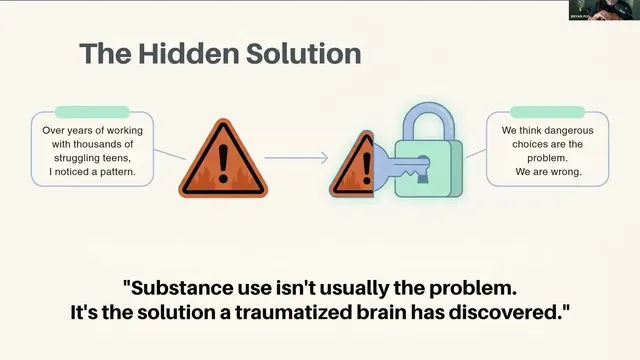 Webinar78 min
Substance Use & the Teen Trauma Brain
Adolescentes y salud mental · jul 2026
Ver la grabación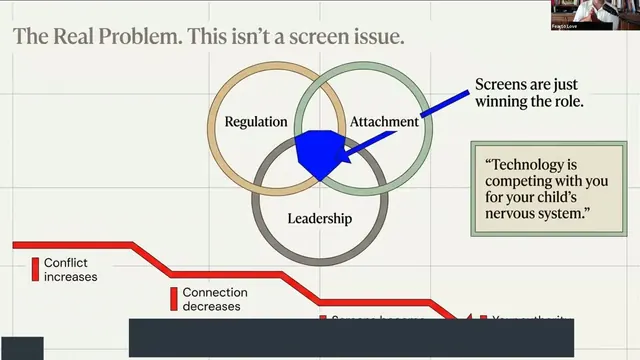 Webinar97 min
You vs. Their Screen
Adolescentes y salud mental · mar 2026
Ver la grabación Webinar106 min
The Silent Scream of Your Adoptive Child
Adolescentes y salud mental · feb 2026
Ver la grabación