Balancing the Family: When One Child Needs More
When one child requires more emotional attention and support, the entire family system can feel the impact. Navigate sibling dynamics, guilt, resentment, and emotional exhaustion while still creating connection.
Presenter: Bryan PostRecorded Aug 202657 minEnglish · Captions (CC)
What you'll learn
- As Bryan Post puts it, children with early trauma (even before birth) are stress-sensitive and fearful. High cortisol takes 36 hours to clear, so a child who can't recover lives in constant stress.
- Joseph LeDoux's finding: in times of stress our thinking becomes confused and distorted and our short-term memory is suppressed. So ask of every consequence: is this creating more stress or reducing it?
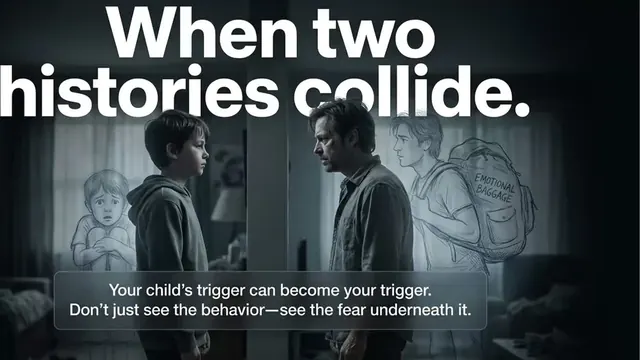
- Bryan saw his adopted sister as “the problem” because his parents were always stressed around her. Your other children will learn how to feel about their struggling sibling from how you feel about that child.
- When the neediest child overwhelms you, slow down, soften and remember the pain they come from. Then grieve for their pain and your own, because “if you do not feel it, you cannot release it.”
- Why your child's stress automatically becomes your stress, and why breathing is the one way to go from reacting to responding. As Bryan puts it, “We set the thermostat in the home, not our children.”
- It's the quality of time, not the quantity: give the needy child 5 to 15 minutes of full presence, meeting their regressed state, then say “I'll be back” and go to your other children.
Transcript Show full transcript +
0:00I'm not sure what happened. I'm not sure what happened. It took me off. Maybe I was too hyped up. Too much energy. Too much high frequency. Too much high frequency. That's OK. We'll recover. We'll get back to it. Let me just check. Let me just take it off. Should have muted everyone. Fantastic. Everyone's been muted. All right. Good, good, good, good, good. See someone is there. I wonder how that happened. How did I get something kind of shady going on? All right. So I don't know where I left off in the mornings at 9 AM Central Standard Time, which is 7 AM California time. I also do a live Q&A. And we do that through Bondify. So if you're not a part of the Bondify community,
0:58then make sure you download the Bondify app. And it is free, of course. So you download the Bondify app. And then you are able to, you'll see, when you sign in to Bondify, you'll get the notification. You should see the notification for the Zoom to sign up for the Zoom, because it's a separate Zoom. And we do that every Wednesday. So I was saying good morning to a participant, because she's always faithfully there, even when no one else is there. She and I are there rocking and rolling, sharing great content and information. So OK, without any further ado, let's jump right into this. I'm Bryan Post, by the way, if you don't know that. When one child needs more, a guide to stay connected as a family. Now here's something pretty interesting. Oh, so that recording stopped the first time. I want to make sure. I don't know who that is.
1:54I don't know who's on that Fear to Love also signed in. But can you make sure the recording is gone? And I've got a bunch of people got disconnected. That's so disappointing. Maybe not. Maybe it was just me. Can you make sure the recording's gone? Let me do it. We record all these. So recording is on, it looks like. We record all these. I think they send them out to you all as well. So you should get that. You should get that recording.
2:27So when one child needs more, a guide to stay connected as a family. So some children just need more of our energy. Medical needs, big feelings, a hard past can take up a lot of time. This is real. This is hard and it's OK. I am going to share kind of a personal perspective on this. Everything I do is actually a personal perspective. If you didn't know, I was in foster care. Then I was adopted. I had a sister who was adopted. And we grew up in a household with two parents who loved us very much, but also two parents who had a significant amount of trauma. And when you combine two traumatized children with two traumatized parents, then you get what became World War Three. Now, here's an interesting story. And I'm going to just go ahead and share this at the top of the hour. My sister, because of her early history,
3:23had a really hard time self-regulating and an even harder time co-regulating. And so when she would get stressed, because this is how I like to describe us, us children, which are your adopted and foster care children. And other children, too, if you've experienced early trauma. Two things you need to remember, stress-sensitive and fearful. Stress-sensitive and fearful. You could literally cancel out all the other diagnosis. And I'm talking about across the spectrum. And if you can see stress-sensitive and fearful, it begins to change your paradigm.
4:08So my sister and I were both stress-sensitive and fearful. But the difference was I had a completely different in-utero experience. My biological mother actually enjoyed being pregnant. So she didn't eat, she didn't eat bad food, she didn't smoke, she didn't drink. She ate good food, she got plenty of exercise, she got plenty of sleep. I had three half-siblings, had three half-siblings. My half-sister passed away from breast cancer, I think it was about eight years ago now. But one of the first things that my biological mother said to me when we came into reunion is that she always loved being pregnant. And funny enough, I always knew that innately. Just as a mental health professional, I always had an innate sense that I had a really good in-utero experience. And if you don't know because you haven't followed me or you don't kind of know the overall perspective that I take, number one, not only do I take a love-based perspective to everything
5:04because I believe that love is the most healing, most powerful healing force in the universe. But I also believe that we don't acknowledge the sheer impact of the in-utero experience on the developing child. And that starts from the fourth week after conception. The fetus starts to begin the process of developing the auditory mechanisms. So they begin to hear or at least developing those mechanisms. And by the second trimester, the fetus is already psychologically processing. So everything that that biological mother experiences during those nine months not only has an impact in development, but we carry those early experiences with us for the rest of our lives. They're based, they're rooted in our brainstem. So that those experiences in the brainstem, when we become really stressed, they turn on, they come alive.
6:04There's so many parts of that. But I tell you that because my sister, my adopted sister, she was three months premature. She weighed three and a half pounds when she was born. And she spent the first three months of her life in an incubator. So if you think about that because she was alcohol exposed, possibly some drugs, if you think about that impact on her early experience and you contrast that to my experience, it completely changes everything. I had a more effective ability to regulate stress because we're developing those mechanisms in utero. So I had a more effective ability to regulate stress. My sister could not regulate stress.
6:50And I've said on various webinars and trainings before that research tells us that it takes 36 hours. I'm going to give you all this perspective. It takes 36 hours for high levels of cortisol to clear the body-mind system. So if you have a highly stressful experience, it's going to take 36 hours for that cortisol to clear the body-mind system. Now, because I could more effectively self-regulate I could have a highly stressful situation. Let's say I get in trouble at school and then I come home or I have a bad grade or I did something I wasn't supposed to do. I did that a lot and my dad comes home and he whips me. Well, and I didn't say spank, he whipped. My dad was a whipper and usually the leather strap. I would go into my room after such an experience
7:47and after I'm done crying and feeling bad and feeling sorry for myself, I'd usually pull out my little He-Man figures and I'd play football games on my bed and I would do that. I could do that for two to three hours. Well, that was my way of regulating. So I'm already starting to calm down my mental, get my hippocampus back online. My hypothalamus activated because I enjoyed playing with my little men and I could come out and have dinner and not have any problems. Well, my sister was, she could not do that. So within 36 hours, cortisol is completely clear through my system and I'm back to school and hanging out with my friends and studying and learning and doing all the good stuff that comes from a regulated brain. My sister on the other hand could not do that. She would get in trouble, she'd get a whipping
8:42and she could not regulate. So she would shut down or get overwhelmed or go in her room and do something. I don't know what she would do, but it would not be long before she was getting into trouble over something else. And so she couldn't go 36 hours without another peak level of cortisol experience. And so before long, and then she has to go to school. So then before long, she's in a constant state of cortisol. So think about this. Number one, it's really important as a framework and as I've worked with foster parents over the years, especially foster parents and new adoptive parents who still have visitation.
9:37It's one of the reasons I don't like visitation for kids. I think it's much more about self-centered adults than I do in the best interest of the children because a lot of times it's too stressful and if a child's not gonna reunify and the parents not pulling their act together, then why continue to expose that child to that experience? I have a friend whose child for three years they had to do weekly to bi-weekly visits and now her daughter who's like 13 or 14 years old still has anxiety when it's time to get in the car. That's because the car became like PTSD because of that constant transition. So transitions become very difficult. And so I'm not crazy about the whole visitation thing because I think it's oftentimes too stressful and then who has to deal with the fallout after the visitation or the foster parents or the adoptive parents. But if you recognize that you can be more mindful
10:33and sensitive to the overwhelm that your child's in. So my sister could not recover and because she could not recover it wouldn't be longer before she was getting in trouble again. And then if that's the experience for a sustained period of time that literally begins to look and feel and sound like living inside a World War III. She was in trouble all the time. So I stopped getting in trouble when I was 10 years old or for the most part and not because I stopped all these behaviors that I was doing because I didn't. It's because I was actually regulated enough to be smart enough to not get caught. That's the only reason. I didn't just magically stop misbehaving at 10 or 11. I just by the time my brain hit that stage where abstract development kicks in
11:30I could just regulate more effectively and just didn't get caught doing the things that I was doing. But my sister was always getting in trouble, always. And so then it just became this constant, this constant level of stress. And I'm telling you this because you need to understand that my parents loved us very much. They did the absolute best that they could. They provided for us, they didn't drink, they didn't smoke. There was no horrible sexual abuse or maltreatment going on. They did the absolute best that they could but it was still World War III in my home. It was constant stress, constant tension. Until my sister left home at about 15. At 15, she left home. She didn't run away. She left because at 15 you're no longer getting a whipping. That's called a fight. So she left and things got really quiet in our house.
12:19And so my perspective, and this is really underlines the whole talk. This is, if you get this, then you can sign off and don't even need to listen to the rest of my jibber jabber for the next hour. My perspective as a child growing up was that my sister was the problem. Because she was always misbehaving, because she was always getting in trouble because my parents were always stressed, because it was always some issue when it came to my sister. My perspective as her sibling who was only one year older than her was that she was a problem child. And so now think about this. She could not regulate stress effectively. She could not get outside of that 36 hour window before she was in trouble again.
13:15So then what would happen is she'd go to school because she's still within that 36 hour window of high cortisol exposure. Then she's getting in trouble in school. So she's either not able to concentrate. If you follow me long enough I believe the things that I share with you will start to make so much common sense. You'll be like, well gee, that makes a lot of sense.
13:48Joseph LeDoux, one of my favorite scientific clues. Joseph LeDoux, New York University neuroscientist, author of The Emotional Brain. I'm in Dallas today, by the way. I'm in a hotel on the 28th floor and I see the whole of the Dallas skyline and it's very beautiful. And I'd show you but it probably the camera wouldn't capture it so you wouldn't really be able to appreciate it but it's pretty amazing. Joseph LeDoux, New York University neuroscientist, author of the book, The Emotional Brain says, listen to this because it was a paradigm shift in my life 25 years ago. In times of stress, our thinking becomes confused and distorted and our short-term memory is suppressed. I'm gonna say that one more time because that finding by itself could revolutionize schools and families, it could revolutionize relationships
14:46if you really can grasp it. Now, I've been saying that for 25 years since I learned because it's so important, it's so profound, it has so much depth and so much meaning but you might be hearing it for the first time. I know some of my certification students have been hearing it a lot. So they're shaking their heads but you may be hearing it for the first time. I am going to beg and plead with you to please write this down because if you don't, you're gonna forget it and it can be paradigm shifting. I'm gonna say it one more time and then what you need to do, what I would suggest that you do is write it down 10 times a day, this one statement, write it down 10 times a day for the next week to two weeks, 10 times a day.
15:45Just that, just this one statement, 10 times a day and something amazing is going to shift in your brain because you're gonna be creating this repetition. And this is how all change occurs. The only change only occurs when the brain changes. Change does not occur until the brain changes. So if you are not creating enough repetition and there's not enough emotional impact going on to change your brain, the brain's not gonna change, so behavior's probably not gonna change. It's not gonna change. Here's the statement. In times of stress, this is Joseph LeDoux, L-E-D-O-U-X, author of The Emotional Brain. The best books in mental health came out 20 years ago. The absolute best came out 20 years ago. Amazing, amazing. In times of stress, our thinking becomes confused
16:40and distorted and our short-term memory is suppressed. When you are stressed out, you cannot think clearly and you cannot remember, therefore you cannot learn. When you are stressed out, you cannot think clearly, so you cannot remember, therefore you cannot learn. When you're stressed out and you're not thinking clearly, you cannot remember, therefore you cannot learn. I can say this 50 times because it is so important. When you are stressed, when a child is stressed out, the child cannot think clearly, they cannot remember, so they cannot learn. So if you were an adult in the presence of a stressed out child
17:35and what you're doing to them, and you don't even realize, you don't even realize, that's the problem. We don't even realize what we're doing is actually creating stress. If what you're doing to the child is creating more stress and only you can answer the question, I think, sir, for them within a moment, and that's stressful, but because we're not together all the time, you have to challenge yourself to ask, is what I'm doing creating more stress or reducing stress? If it's creating more stress, it's not going to help. So you can take the whole list of your behavior modifications, your consequences, your threats, your shames, your whippings, your timeouts, you can take the whole list
18:31and all you gotta do is ask, is this causing more stress or is it reducing stress? If it's causing more stress, it's not going to help because it's not helping the brain enter into a new state of functioning. There are only two ways the brain changes, emotional impact or repetition. Okay, that wasn't even a part of this talk, but that's what I do.
18:58So I grew up in a home with a sister who was completely stressed out, therefore parents who were completely stressed out and parents not only with a sister who had significant trauma from the beginning of her life, but I had two parents who had their own significant trauma. Dad was a Vietnam veteran post-traumatic stress. They were both children of alcoholics. My mom's dad died in front of her from a heart attack when she was nine years old. No one ever talked about it, no one ever processed it. They were parentified, they both had extensive trauma. So when we would be stressed out, then they would feel hyper responsible and then they would become stressed out. I could regulate my sister couldn't. So alls my parents knew to do was to hit more or to yell more or to take more stuff away. And you know, this is so funny.
19:53I think about this stuff now. I mean, I'm so blessed to have had the life I've had because I think about stuff now like parents taking the door off their child's bedroom door, you know, usually cause the kid slams the door or whatever reason, parents lose their minds momentarily or for long periods of time and then take the door off and then guess what you have to do? You have to look at your child's messy room every time you walk past it. Do you know how many times I passed my sister's bedroom and it did not have a door? Because for whatever reason, parents think that taking the door off is going to make some significant difference, but it doesn't, it just stresses them out because then they gotta see the dirty room or then they gotta see the child doing something they're not supposed to be doing. Do you know how common that still is to this day? I go into homes to this day
20:50and I'll see doors removed off of the hinges. It's the most interesting thing to me that I got to grow up experiencing. So I grew up in a home where my sister was the bad guy. She was the bad guy. She was the Darth Vader. She was the black sheep. She was the scapegoat. Everything bad that ever happened in my home was because of my sister. So that's my perception because I'm watching my parents completely stressed out and yelling and hitting and fussing and threatening and shaming day after day after day after day for years. So naturally, what am I gonna think? My sister is the bad person. That was my perspective. That was my paradigm until I was about 32 years old.
21:4832, I'm gonna say 32, but it was anywhere between 29 and 32.
21:54And I'd been lecturing around the country and teaching this stuff that I teach to this day. I think I'd come from California, landed in Dallas and landed in Dallas like midnight, finally got to my hotel at like 1.30 in the morning. And then at about 3.30 in the morning, my mom calls me and I wake up at 3.30 in the morning. I said, yeah, hey, what's going on? She said, it's your sister. She's in labor or they think she might lose them. She's in the hospital. They think she might lose the baby. And I'm like, okay. And so then I hang up and I was seething mad. This was my exact thought. My mother just woke me up to tell me about more b******t that had to do with my sister. And I just got the bed,
22:50just been asleep for two and a half hours, had to get up in two more hours to drive three hours to do some consulting with the military and their domestic violence program. So then I had to drive another three hours and here she is waking me up to tell me about more b******t to do with my sister. My sister and I at that moment had no relationship whatsoever. None, none, didn't like each other. Didn't like her, didn't want to be around her. She'd draw my, no, not that. We'd never really had a close relationship. We just didn't, it was just too much stress in my home. And she was always the bad person. So she was always stirring up s**t. So I fell back asleep. Mind you, I'm like 30, 30. Yeah, I'm probably 31, 32. I fell back asleep.
23:47I woke up a couple of hours later. Got dressed, got in the car and I was still mad. I was still mad. I was driving, I drove through Dallas. I got on the other side of Fort Worth, still mad. And in some very interesting universal occurrence, God tapped me on top of my head. And this has happened several times throughout my life. God tapped me on top of my head. And as soon as that happened, I'm driving and I just started spiraling down into the rabbit hole of my sister's life. And I'm realizing in this moment of time, mind you, it's still dark outside. It's early in the morning, probably 5, 30 in the morning, still dark, 4, 30 in the morning, probably 4, 30 in the morning, still dark.
24:43And I go all the way back to her birth. And see, I knew about her history. That's so important. I knew about her history. How many times do we know about our children's history? But when we're stressed and our thinking's confused and distorted and our short-term memory shuts down, we can't access any of that. That's why the first thing you gotta do when you get stressed is you gotta condition yourself to breathe. So I start spiraling down to my own brainstem, go all the way back to her in utero experience. And my gosh, I just started grieving for her. I got so sad. I was crying and I was driving and then it was raining and I had to pull over. I was crying so hard and it was raining. I couldn't see, I had to pull over. And I just realized in that moment that she had suffered her entire life
25:39and no one understood her ever, ever. And here she was still suffering. And do you know I drove that three hours, two and a half hours, I was going through Wichita Falls, which is where she was in the hospital, prior to this, prior to this, to that moment of God opening up my heart to my sister. I would know, I've never done this, but I drove through Wichita Falls, I found the hospital and I tell you what, we didn't even have, I don't know that I even had, I don't think I had GPS back then. There was no GPS. I, it still dark, found my way through the hospital, parked on the side of the street, walked into the hospital, asked what room she was in and this is at this point, it's like 630 in the morning. Which is, what about visiting hours?
26:35They pointed me down the hall, I walked in her hospital room and she saw me, she said, Bryan, because she was, I was the last person she expected to see. I was the last person I expected to walk through that hospital, I would have never done that. I am telling you, with no shame, complete transparency, I would have never done that. I had been pissed off at my sister my entire life because she stressed me out so much and because my parents were already stressed out, I just, she was just the bad person. But when God tapped me on the head and opened up my heart to her experience and I started grieving for her and I found that hospital and I walked in that hospital room and I pulled the chair up to her and I put her hand inside of mine. That was the first affection that I had ever demonstrated towards my sister.
27:32The first affection took her hand in mine and I looked at her and I started crying again and I said, I am so sorry. I am so sorry for everything that you've gone through. I am so sorry for all the years that you've suffered and I'm so sorry for the role I have played and she started crying and we're just crying together and it's just this moment, it's just this beautiful healing moment and we just sat there in that hospital room together and then it was time for me to continue my drive on to work. And before I left, I said, I love you. That was the first time I ever told my sister I loved her. 30-something years, first time I'd ever told her I loved her. I said, I love you because I understood in that moment she wasn't the freaking bad guy.
28:30She was the victim to a world, to a community, to a family, to a school system that did not understand her and did not understand their own stress and so they behaved towards her like she was the problem, she was not the problem. And I said, I love you and she said, I love you too but I don't want that for the first time. For the first time, for the first time in my entire life I felt like she was my sister, says my internet connection is unstable. You guys still hear me shake your head? Yes, yes. Okay, perfect. So, we had a much better relationship after that.
29:25She, you know, she's my sister, she had a hard life. She had a hard life, it didn't stop, it didn't change, she's still had a hard life. I even offered to adopt her daughter, my niece, who's now 26 years old, has her own baby but she didn't want that but I was like, look, I will adopt her, you let me have her, I will adopt her, I was single at the time, traveling all around the country. I was already dead set, I was gonna just strap this little baby on me and that we was gonna roll. And my sister didn't want that, which was okay. And then, you know, four years, it was about four or five years later, my sister was killed in a car accident. She got, went to prison, gotten out of prison after about two years and she was just starting to get her life back on track. I mean, she was, she lived,
30:20she lived wide open for her whole life, stressed out, really. She was just starting to get her life back on track, she was on her way back from her son's birthday party, a semi truck slid across, it was icy in Oklahoma, slid across the highway, hit her head on and that was it. She was 36 years old but I remember that moment more than anything and here's what I want you to understand, I got a whole presentation with a whole bunch of slides and we'll run through them.
30:54But here's what I need you to know. This is the gospel, your child or your children will gain, they will gain their perception of how they're supposed to feel about their stressed out, traumatized, adopted foster care siblings based on how you as the parent feels about that child. I'm gonna say it again, your children, I'm assuming you have, you know, a couple of children is a stress sensitive, fearful child who's always in trouble, who's always acting out. The one who demands the most time and attention and energy.
31:49The neediest of the children and that's probably the child who's been diagnosed who goes to therapy. The other children will develop their perception of that child based on how you as the parent feels about that child. Now here's the thing, there's no reason in this life to not be honest and authentic with yourself. You have to take an honest accounting and you have to say to yourself, you have to look in the mirror and you have to say to yourself, when I think about that child, when I look at that child, when I interact with that child, how do I feel? Do I feel stressed out and overwhelmed and scared?
32:44Because that's the vibration sending off, the fact that how do I feel loving, joyful, excited, calm and regulated? Because that's the vibration I'm gonna send off and your children learn from the vibration that you send off. And we know that our emotional field expands 15 to 20 feet. Your emotional, all of our emotional energy fields are expanded to 15 to 20 feet outside of us. So what you feel gets reverberated throughout a energy field that's 15 to 20 feet outside of you. So as the parents, as the adults, that feeling experience you have towards that child
33:39that stresses you out and overwhelms you makes you feel scared and makes you sometimes wanna lose your mind. That vibration, see, this is why teachers struggle in school with certain kids because the child, the presence of the child stresses the adult out. The adult feels negative and protective and in survival. So that's the vibration. So pretty soon all the other kids are viewing that child the same way as a bad child. Now guess what? Now that child who's being viewed as the bad child now is receiving a negative vibration from everyone they interact with. My sister spent her entire childhood as the bad child, which means she spent her entire childhood being bathed in the negative vibrations
34:36of the adults around her because they did not understand. They did not understand she was stress sensitive. They did not understand she was fearful. They did not understand that when she was stressed her thinking was confused and distorted and her short-term memory was suppressed. They did not understand that when she was stressed her brainstem would turn on and all that early in utero trauma would cause a manifestation of her behaviors and an acting out child as a stressed out child is a regressed child. They did not understand. Alls they did is became reactive and stressed out in the midst of her stress. And a stressed out parent cannot calm a stressed out child. So if we're cutting through all the noise
35:34the thing you need to know first and foremost is that that needy child in your home. And I was talking to one of my favorite moms the other day. And she has these two 12 year old twin boys and one of them got really upset and said I want my brother gone. I want him out of here. And mom was, you know, she was hurt because she loves both her children but she also knows that one has a tendency to be more violent towards the other and that one who's getting hurt wants him out of there. And she was able to be supportive. She was able to listen. She was able to be reflective. She's just a fantastic all around mother. But it just reminded me of how stressful and bad it can get when one sibling in their stress sensitivity
36:31and their behavior overwhelms the household because as soon as the household becomes overwhelmed including the parents then that becomes a dominant perception. Everyone has to adopt that perception because the vibration is so big. The negative vibration is so big. And then you have this child getting bathed and negativity all the time. Not just, I'm talking, I'm talking 24 hours, seven days a week. My sister could not win. So I wanted to share that with you. Man, I went, good, good, good, good, good. I wanted to share that with you because that's what you need to know about this topic specifically. And you can just think about it and you can process it and you can feel through it
37:27and it'll guide you.
37:29What the parents have to do is they have to take an honest accounting and they have to calm down their fear and their stress. Now, oh, I must be standing on the preacher's podium today. Must have something to do with all this good sunshine coming through this window. Here's what you gotta do. Oh, yeah, I might do this presentation again and actually go through the slides, but I'm giving you the stuff. This is the juice, this is the sauce. Here's what you gotta do when you have that really needy, overwhelming child. The first thing you have to do is you have to remember they are stressed, sensitive and fearful. That's the first thing you have to do. The second thing you have to do is to remember that as soon as they become stressed,
38:25you will become stressed. You will become overwhelmed. You will become fearful and then that becomes the dominant vibration that all the other children are gonna pick up on. The third thing you've gotta do, oh, this is the good stuff right here. This is gonna be the good stuff. Oh, you've gotta breathe. You've gotta slow down. You've gotta soften. This is that heart opening. And you gotta go back and you gotta remember all the pain and suffering your child has come from. You gotta go back and you gotta remember
39:20all the pain and suffering your child has come from and you just have to take an honest accounting. And you'd have to take an honest accounting of your role in some of that suffering. You didn't create that original stuff. You didn't create those original wounds, those original traumas, right? You didn't do that, but you've gotta take an accounting of it and you gotta take an accounting of your role and you've got to be willing to grieve.
39:54You've got to be willing to grieve for your child and your child's suffering. You have got to get quiet. You have got to slow down. You've got to soften and you have got to let your heart open up and embrace your child's pain and your role in their pain. And you have got to grieve. You've got to grieve. There's no other way around it. If you do not feel it, you cannot express it. If you do not feel it, you cannot release it. If you cannot feel it, you cannot release it. And what is it? It is the energy. It is the energy that we store. Well, we've had painful traumatic experiences. We store energy fragmented in our body and the single greatest pervasive form of trauma
40:52in our society is unexpressed grief. You have got to be willing to grieve for their pain. You've got to be willing to grieve for your own pain. Raising these children is not easy. It is difficult. It is challenging. It is stressful. It is some days overwhelming and some days you will want to give up. Some days you will want to call the DHS worker, the Child Protective Services worker, the adoption worker and you will say, come get this freaking kid out of my home. It's just the reality. And you have the option to have all those feelings. And then once you've had those feelings, I want you to allow yourself to grieve.
41:48When you will allow yourself to grieve, you will feel that energy because what I want you to know right now is that you're, and this is, it's a necessity.
41:58It's a biological necessity. It's a neurophysiological reality that when someone else becomes stressed, in this example we're using your child, when your child becomes stressed, that child sends a vibration to your amygdala which causes you to become stressed. It's automatic. So literally that is the process of taking things personally because as soon as that stress hits your amygdala, it's gonna go down into your brainstem, it's going to look for a corresponding memory and experience and it's gonna release that energy and that's what you're gonna feel. You're gonna feel upset. You're gonna feel stressed. Whatever that experience is in your own brainstem, that's how you take it personally then all your cells get activated and now it's personal. But you've got to train yourself that when that stress hits your brain,
42:53you have to breathe. You have to breathe because breathing is the one proven way to interrupt your stress reactions. Breathing is the only mechanism. It's the only mechanism that will allow you to go from reacting to responding. From reacting to responding is breathing, breathing, breathing, breathing, breathing constantly, mindfully, intentionally, conscious until your brain gets trained and when it gets hit with something negative, you have a reaction and the first thing you do is start breathing because when you start breathing, you keep your thinking on line. Your short-term memory stays awake and your vibration changes.
43:51Your vibration changes. You've got to change that vibration. That's expanded out 15 to 20 feet. You've got to change that vibration. We are the adults. We are the parents. We set the thermostat in the home, not our children. If you let your children set the thermostat in the home, you're gonna be a victim to your child and you can't be a victim to your child and help them heal. So you've got to feel all the upset. It's yours. You're entitled to feeling the upset and then you've got to grieve. You've got to grieve. And once you've grieved, once you've opened your heart, your vibration changes from fear to one of love. Now you can look at your child.
44:46Now you can look at your child with a different lens. I'm hearing somebody. Okay, now you can look at them with a different lens. It's a softer lens. It's a more loving lens. It's a more understanding lens. And when you can look at them from that lens, then you are able to not take it personally. Their suffering is not your suffering. But until you get to a place to where you can breathe,
45:41where you can respond, where you can honor, where you can calm yourself down, where you can see that they're not the threat, you can't create a new space, you can't create a new energy for them to be able to have their feelings. They have to have their feelings. The feelings are the path to the healing. The feelings are the path to the healing.
46:06So what you have to understand when it comes to the other siblings is it's not the quantity of time, it is the quality of time. You have a child who is needy. That child doesn't act out for attention, that child acts out because they need attention. They need you. But you are resistant to that child because that child has been stressing you. That's why you have to grieve. You have to grieve. So you stop pushing the child away because energetically and emotionally you are pushing the child away. You've got to stop pushing them away. Because they cannot heal without your open arms, without your love, without your support, without your kindness, without your patience, and without your faith. So you've got to grieve so you can open up. So you can open up in that way when that child is being needy.
47:01You can give them that time.
47:05I had a model of what she said. I have a child who talks nonstop about nothing at all. She said, what do I do? And I said to her, Hey, post, do you froze? I put them to follow away. There was no social media back then. Turn off the freaking TikTok and you look at your child and you give the child attention because the attention is energy. It's energy when the child, a stress-sensitive, fearful child is stressing and regressing. They're not 10 years old or 15 years old, five-year-old.
48:00They can be a baby. But my sense is immature then you feel more threatened by it. That's what my parents would do. They'd feel more threatened by it. Hey, post, do you keep on freezing? Broken connection. Broken connection. All right, we're doing the best we can. We've got nine minutes left. Nine minutes. You get to recording. Hopefully the recording keeps recording because I might break the connection but my flow is not broken.
48:56My flow continues. So hopefully the recording gets it. So you have to grieve. You have to get present. You have to see that your child's not a threat. And when you start doing that, the flow was flowing. That's right. When you see that your child, when you can see that your child is not the threat, guess what happens? Something. Still freezing. Okay. Could have something to do with being up on the 28th floor. Isn't it such a gimmick the internet bars
49:54and you know that it's a gimmick? Elon, who I know is listening right now. So here's the thing. The child, the child,
50:17A parent asks, what's my suggestion about the other siblings that need energy and attention to? I was just about to say that. We're vibing. We're vibing. Your children who have a greater ability to regulate, they don't have the same emotional deficit of your child who doesn't have the ability to regulate, or who has a more challenging time regulating. See, all of your children need your attention. That's because they're children. They all have to grow. They all have to develop. But here's, it's a two-fold dynamic. The one who's really needy, you spend so much time and energy pushing them away or giving them a half-hearted presence that the need continues.
51:12See, when you're not emotionally present, you're emotionally absent and you can be physically present and not emotionally present. So you can be physically present. You can have your child sitting right next to you and you can be on your phone and you can be going, yeah, uh-huh, uh-huh. Yeah, yes, uh-huh. That's not emotional presence. The way the brain picks up on that is the brain picks up on that as emotional absence and the way the brain, the way the brain registers emotional absence is a stress. So, yes, she does need a ton of attention. 100%, she's still a baby. So you have to give her that attention. You have to be present. And then you have to say, and here's the thing. Here's the saving grace.
52:09All your children don't need all your attention all at the same time. When you're worried about all the other children or the other child getting the attention, when the other one's getting the attention, the other one who really needs attention, when they're getting the attention, then you're not super present. So you gotta get super present and you gotta trust that the one who also needs your attention is gonna get it in that you can give it. So when you're giving full presence, you can give full presence for five, 10, 15 minutes. The internet connection is unstable. And then you say to that child who's needy, you say, sweetheart, I love you. Thank you for sharing this time with me. I'm gonna go, I'm gonna go spend a little time with brother and sister right now, brother or sister or sister or brother or whoever.
53:05And I'll be back, okay? That's what you say. You acknowledge, you let them know, I'm gonna, this has been a special time, I'm gonna come back. And then if needed, you go find the other sibling and you give them the five minutes that they need because when you're needy child, your needy child may need 15. Your child who's not needy, they're not needy because they're regulated. They have a window of tolerance. They're not needy because they're regulated.
53:34But see, you'll have a tendency to wanna go meet those perceived needs because it's easier to meet their needs. So you're getting a different kind of feedback. See, when you're meeting their needs, you're getting a different level of feedback than meeting this child's needs. This child's needs feels like having to feed a baby constantly because they are a baby. When you start engaging with them and you see the baby and you start engaging with the baby, engage with the baby, engage with the two-year-old. Engage with the regressed state. Don't engage with the 10 or the 15 or however old they are chronologically. Engage with the regressed state. See the baby, meet the baby's needs. And here's something really hard. This is really challenging, but man, there's such a breakthrough that's gonna happen.
54:33Give in, give in, give in to meeting the need because your other children can come over and they can check in and you can give them a hug and a kiss and you can meet them, their need and you can tell them what they need to do or whatever and they'll go do it because they have a window of tolerance. Be grateful for that. Commend yourself for that. Commend yourself for having all these tentacles, being able to meet the needs of all these children because you are a bad-ass parent and that's an amazing thing. Give yourself some credit for what you're able to do. Give yourself some credit and when they come, when the other children come to you, you can get real present with them. You can get real present. They can get their cup filled up so much faster than the one who's got the cup deficit.
55:29But what's gonna happen over a time when you start getting really present and giving in to the one with the deficit, their cup's gonna start to fill up and as their cup starts to fill up, their window of tolerance gets bigger and as their window of tolerance gets bigger, then they're able to have more effective regulatory ability and as they have more effective regulatory ability, then they're not regressed anymore. They're no longer regressed. And when they start progressing, that's when they start getting back into the development, fixing and repairing everything that they needed that was keeping them stuck to begin with. See, that's the thing my sister didn't get. My sister, I meet her at that regressed state. My sister's never had anywhere that even for that type of stuff.
56:28Being mature all the time because she never had anyone to go back and help her move through those developmental phases all over again. And that's what your child needs. That's how you meet the need. That's the maximum need. And then you go to your children.